
If you’re planning a new backyard pool, one of the first questions you probably have is simple: how long is this going to take? A realistic pool installation timeline matters because it shapes everything from your budget and backyard access to family plans, landscaping, and how soon you can actually start enjoying the water.
The short answer is that most projects take several weeks to a few months, depending on design complexity, permitting, weather, materials, and site conditions. In the Tampa Bay area, those factors can shift the schedule more than many homeowners expect. A straightforward build may move quickly, while a custom luxury pool with a spa, outdoor kitchen, fire feature, or extensive hardscaping naturally takes longer.
A Typical Pool Installation Timeline
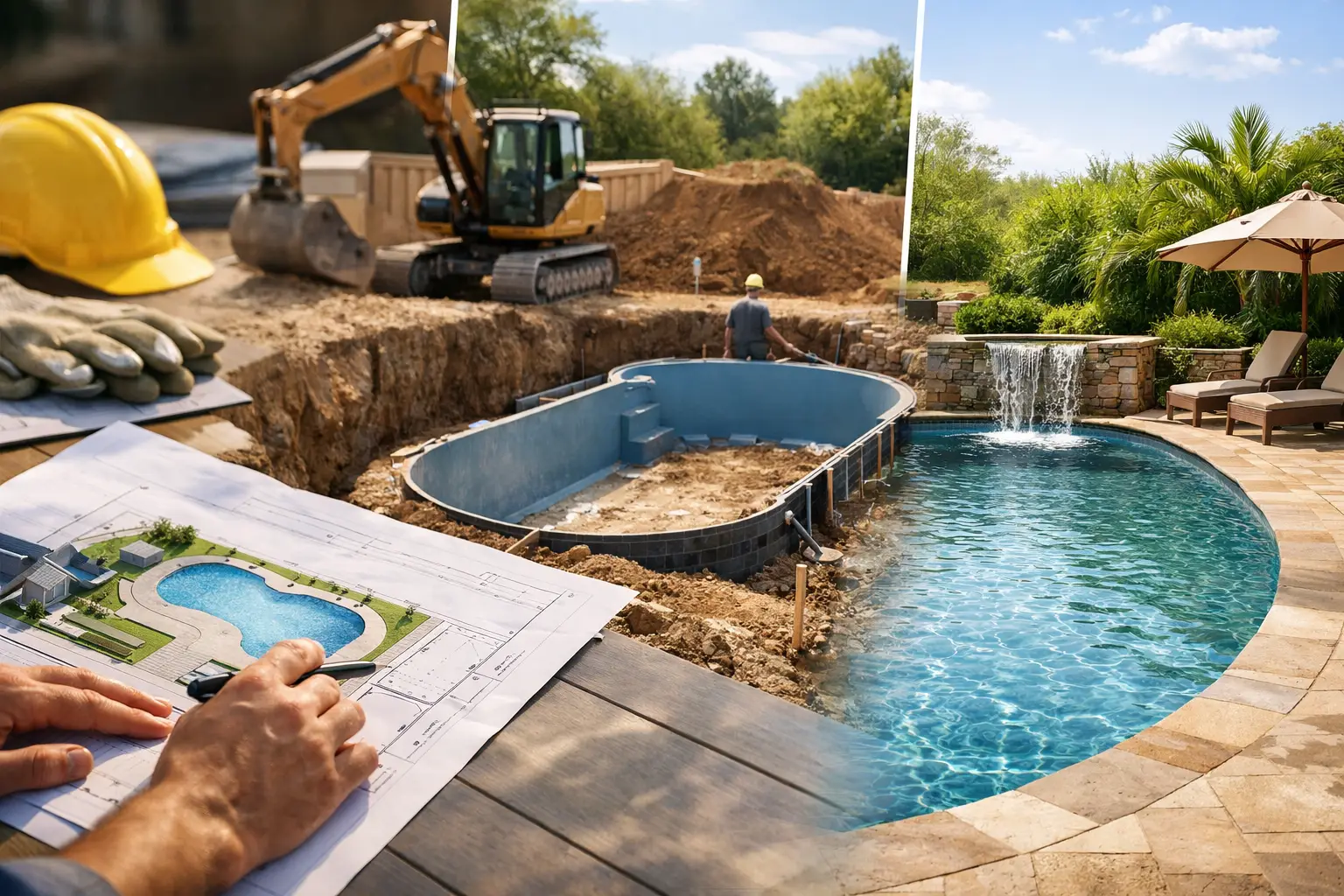
For many homeowners, the full pool installation timeline starts before any digging begins. Design, engineering, and permits often take as much attention as construction itself. Once construction starts, the sequence is usually predictable, but the pace can vary.
A standard custom concrete pool often follows this general range:
- Design and planning: 1 to 3 weeks
- Engineering and permits: 2 to 8 weeks
- Excavation and steel: 1 to 2 weeks
- Plumbing, electrical, and inspections: 1 to 2 weeks
- Shotcrete or gunite shell: 1 week
- Tile, coping, decking, and finishes: 2 to 6 weeks
- Interior finish, fill, and startup: 1 week
That means many projects land somewhere between 8 and 16 weeks from signed agreement to swim-ready pool. Some move faster. Some take longer. The difference usually comes down to choices made early and conditions discovered later.
What Happens Before Construction Starts
The earliest phase is where the project takes shape. This is when homeowners decide not just that they want a pool, but what kind of backyard experience they want to create.
A simple rectangular pool with clean lines, standard equipment, and a modest deck usually moves through design faster than a fully integrated outdoor living project. If you’re adding a raised spa, sun shelf, automation, custom lighting, pavers, pergolas, or an outdoor kitchen, the planning phase expands because more details need to be coordinated.
This part of the process should not feel rushed. Good design work saves time later because it reduces changes during construction. It also helps you align aesthetics, function, and budget before permits are submitted.
In many cases, engineering drawings and permit applications come next. Local municipalities in the Tampa Bay region each have their own review timelines, and permit speed is not always in the builder’s control. HOA approvals can also add time if your neighborhood requires them. For homeowners, this can be the least visible phase, but it is essential.
Site Prep, Layout, and Excavation
Once permits are approved, the project becomes very real very quickly. The layout is marked, access is confirmed, and excavation begins.
Excavation itself may only take a day or two for a straightforward pool, but site conditions can change the schedule. Tight backyard access, buried utilities, unexpected soil conditions, drainage issues, or the need to protect existing structures may all require adjustments. In Florida, groundwater conditions can also affect how work is staged.
This is one of the moments when homeowners often realize why experience matters. A well-managed team knows how to respond without losing control of the overall schedule.
Structural Work and Rough-In
After excavation, steel reinforcement is installed to form the structural skeleton of the pool. Plumbing lines and electrical conduit are then placed before inspections are completed.
This phase tends to move efficiently when the design is clear and the site is cooperative. Still, inspection timing can influence progress. Each municipality has its own process, and projects cannot move to the next step until required approvals are in place.
For a custom pool, this stage may also include setup for spa spillovers, water features, tanning ledges, automation systems, and upgraded lighting. These additions create a better finished product, but they do introduce more coordination.
Gunite or Shotcrete and the Cure Time
Once the structure is ready, the shell is sprayed. This is a major milestone in any pool installation timeline because the pool finally looks like a pool.
After the shell is installed, it needs time to cure properly. Homeowners sometimes assume the project will move nonstop from this point forward, but cure time is part of building a durable structure. Skipping or compressing that window is not how quality work is protected.
Depending on the build method and weather conditions, your builder may provide guidance on watering the shell during the curing period. It can feel like a pause, but it is really part of the structural process.
Tile, Coping, Decking, and Outdoor Living Features
This is where the project starts delivering the visual impact most homeowners have been waiting for. Tile and coping define the waterline and edges. Decking shapes how the backyard feels underfoot and how the full space functions for family time, entertaining, and relaxation.
If your project includes patios, pavers, travertine, retaining elements, fire features, or a complete outdoor kitchen, this phase can become one of the longest parts of the job. Not because anything is wrong, but because finish work takes craftsmanship and coordination.
Material availability can also matter here. Specialty tile, premium stone, custom features, and certain equipment selections may require longer lead times. If timing is your top priority, choosing readily available materials can help keep the project moving.
Interior Finish, Fill, and Startup
The final finish is the point where the surface goes in and the pool begins its transition from construction site to backyard retreat. Plaster, aggregate, or other interior finishes are applied, then the pool is filled and startup begins.
Startup is not just turning on the equipment. Water chemistry needs to be balanced correctly, systems must be checked, and homeowners should be introduced to operation and care. This is especially important with automation, heaters, spas, LED lighting, and sanitation systems.
A quality handoff matters. The best pool experience is not just about build day. It is about knowing your pool is set up to perform well long after construction is complete.
What Can Delay a Pool Installation Timeline?
Homeowners appreciate honesty here: delays are possible, even with a strong plan. Florida weather is one of the biggest variables. Heavy rain can affect excavation, inspections, decking, and finish schedules.
Permitting and municipal inspections can also stretch the schedule. Material shortages, change orders, and site surprises can do the same. In some cases, homeowners unintentionally extend the timeline by making design or finish changes after construction is already underway.
That does not mean delays are inevitable. It means a builder should communicate clearly, set realistic expectations, and manage the process actively rather than promising an unrealistically fast result.
How to Keep Your Project Moving
The fastest projects usually have one thing in common: clear decisions made early. When homeowners finalize design details, choose materials promptly, and understand the sequence ahead of time, the build tends to stay on track.
It also helps to work with one company that can guide concept development, design, construction, and post-build care in a coordinated way. That reduces handoff issues and keeps accountability in one place. For homeowners investing in a luxury backyard, that kind of continuity is often worth more than shaving off a few days.
If speed is especially important, ask about design options that are known to move faster. A plunge pool or a streamlined contemporary layout may offer a shorter path to completion than a highly customized resort-style build with multiple added structures. There is always a balance between speed, complexity, and finish level.
Why the Right Timeline Is Better Than the Fastest One
A rushed pool is rarely the goal. Most homeowners want something better: a beautiful, lasting pool delivered with confidence and clear communication.
That is why the right pool installation timeline is the one built around your property, your priorities, and your long-term plans for the space. For some families, that means moving as quickly as possible. For others, it means taking the time to create a fully integrated outdoor living environment that feels custom in every detail.
At Wahoo Pools, that planning-first approach helps homeowners design their dream, build their dream, and feel supported well after the project is complete.
If you’re starting to picture summer weekends, evening swims, and a backyard that finally works the way you want it to, the best next step is not guessing the schedule. It is getting a clear plan built around your home, your vision, and a timeline you can trust.