

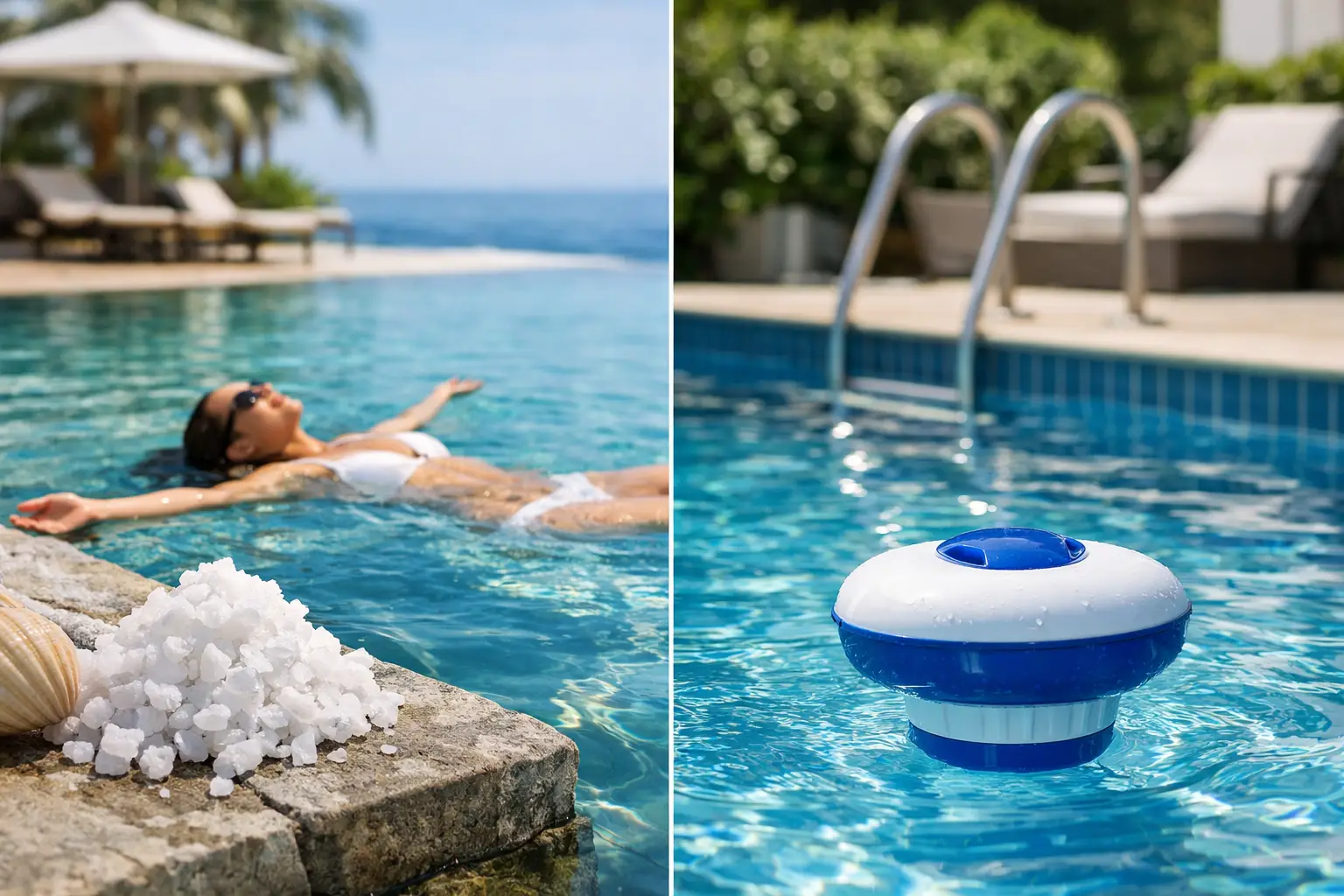
You can spot this question early in the design process. A homeowner is excited about finishes, tanning ledges, lighting, and water features, then pauses and asks the practical question that will shape day-to-day ownership: should this be a saltwater or chlorine pool? It is a smart question, because the right answer is not about trends. It is about how you want your pool to feel, how involved you want to be in maintenance, and how your system will perform in a Florida backyard.
For many Tampa Bay homeowners, both options can work beautifully. The better choice depends on your budget, your sensitivity to chemicals, how often the pool is used, and whether you want a simpler routine over the long run. A great pool should look exceptional and fit your lifestyle after construction is complete, not just on install day.
Saltwater or chlorine pool: what is the difference?
The first thing to clear up is this: a saltwater pool is still a chlorine pool. The difference is how the chlorine gets into the water.
In a traditional chlorine pool, chlorine is added directly through tablets, liquid, or granular products. In a saltwater pool, dissolved salt passes through a salt chlorine generator, which converts it into chlorine as the water circulates. You are still sanitizing with chlorine either way. What changes is the delivery method, the equipment involved, and the ownership experience.
That distinction matters because many homeowners hear “saltwater” and assume it means chemical-free. It does not. What it often means is softer-feeling water, less hands-on chemical handling, and a more steady level of sanitizer when the system is sized and maintained correctly.
How the water feels day to day
This is where saltwater systems win over a lot of families. People often describe saltwater pools as feeling smoother on the skin and gentler on the eyes. There is usually less of that harsh pool smell people associate with heavily treated water, and swimsuits may hold up better over time.
A traditional chlorine pool can still feel clean, comfortable, and crystal clear when balanced properly. But it is more prone to ups and downs if chlorine levels swing too high or too low. In a busy household where the pool gets a lot of weekend use, those swings can show up faster.
If comfort is a top priority, especially for children or swimmers with sensitive skin, saltwater often has the edge. That said, water balance matters more than marketing terms. A neglected saltwater pool will not feel luxurious, and a well-maintained chlorine pool can feel excellent.
Upfront cost vs long-term ownership
If you are choosing between a saltwater or chlorine pool, cost deserves an honest look. A standard chlorine setup usually costs less upfront. There is no salt cell to install, and the equipment package is generally simpler.
A saltwater system typically adds to the initial investment because of the generator and related components. For homeowners focused on keeping the build budget tight, that can make traditional chlorine appealing.
Over time, though, saltwater can reduce some routine chemical purchases and make maintenance more predictable. You are not constantly feeding the pool with manually added chlorine in the same way. Many homeowners feel the added upfront cost pays off in convenience and a better swimming experience.
The trade-off is equipment replacement. Salt cells do not last forever, and eventually they need to be replaced. That future cost should be part of the decision, not a surprise later.
Maintenance in Florida conditions
Florida pools do not get an offseason in the same way colder climates do. Heat, rain, humidity, debris, sunscreen, and heavy use all put pressure on water chemistry. That is why maintenance should be part of the conversation from the beginning.
A traditional chlorine pool gives you straightforward control. If the water needs a boost, you add chlorine. If there has been a storm, a party, or a string of very hot days, you can respond quickly. Some homeowners like that level of direct control, especially if they are comfortable testing and adjusting chemistry themselves.
Saltwater pools automate part of that process, which is a major advantage for busy households. The system produces chlorine as water moves through it, helping maintain a steadier sanitizer level. That can mean fewer dramatic swings and a more consistent routine.
But saltwater systems are not maintenance-free. The cell needs inspection and cleaning, water chemistry still needs regular testing, and the system has to be monitored to make sure it is producing properly. If salt levels drift or calcium builds up on the cell, performance can suffer.
For homeowners who want a polished backyard without turning pool care into a weekly project, saltwater often feels easier. For those who prefer a simpler equipment setup and do not mind hands-on maintenance, chlorine can still be the right fit.
Equipment, surfaces, and wear
This is where the conversation gets more technical, and it is worth paying attention. Saltwater is gentle on swimmers, but it can be harder on certain materials if the pool is poorly designed, improperly balanced, or ignored over time.
Natural stone, some metals, and surrounding deck elements need to be selected thoughtfully in a saltwater environment. Corrosion is not guaranteed, but material compatibility matters. Good design and proper sealing go a long way.
Chlorine pools have their own wear considerations, especially if chemicals are overused or water balance is neglected. Strong chemical swings can be rough on surfaces and equipment too.
The real lesson is that neither system should be chosen in isolation. The sanitizing method needs to match the pool design, finish materials, equipment package, and maintenance plan. That is one reason many homeowners prefer working with a builder who can guide the full picture rather than treating sanitation as an afterthought.
Which option is better for families?
For many families, saltwater checks a lot of boxes. The water often feels better, there is less direct chemical handling, and the swimming experience tends to feel more upscale. If your goal is a backyard retreat that looks beautiful and feels easy to enjoy, saltwater aligns well with that vision.
Chlorine can be a very good fit for families too, especially when budget is a primary concern or when owners want a familiar, proven system with lower startup cost. It is also a practical choice for some renovations where adding a salt system may not be the first priority.
If your household swims often, entertains regularly, or wants the pool to feel like an extension of a luxury outdoor living space, saltwater usually gets strong consideration. If your priority is dependable sanitation with the simplest entry cost, chlorine deserves a serious look.
Saltwater or chlorine pool for a new build or renovation
The best time to decide is before construction or early in a renovation plan. New builds are ideal because the equipment, finish selections, and design details can all be aligned from the start. If you are renovating an older pool, converting to saltwater may still be possible, but the condition of the pool, plumbing, and surrounding materials should be reviewed first.
This is where experienced guidance matters. A pool should not just be beautiful on reveal day. It should be designed to perform well for years in the Florida climate, with a maintenance approach that fits your schedule.
For homeowners building or upgrading a backyard retreat, Wahoo Pools helps connect those decisions from design through long-term care, which is often where the biggest peace of mind comes from.
So which one should you choose?
If you want lower upfront cost, a familiar setup, and direct control over water treatment, a chlorine pool may suit you well. If you want softer-feeling water, less day-to-day chemical handling, and an experience that feels more refined, saltwater is often worth the investment.
There is no universal winner because pool ownership is personal. The best system is the one that matches how you live, how much maintenance you want to manage, and what kind of backyard experience you are trying to create.
When the choice is made carefully, both systems can support a stunning, healthy, and easy-to-enjoy pool. The goal is not to chase a label. It is to design your dream and maintain your dream with confidence long after the water is filled.