

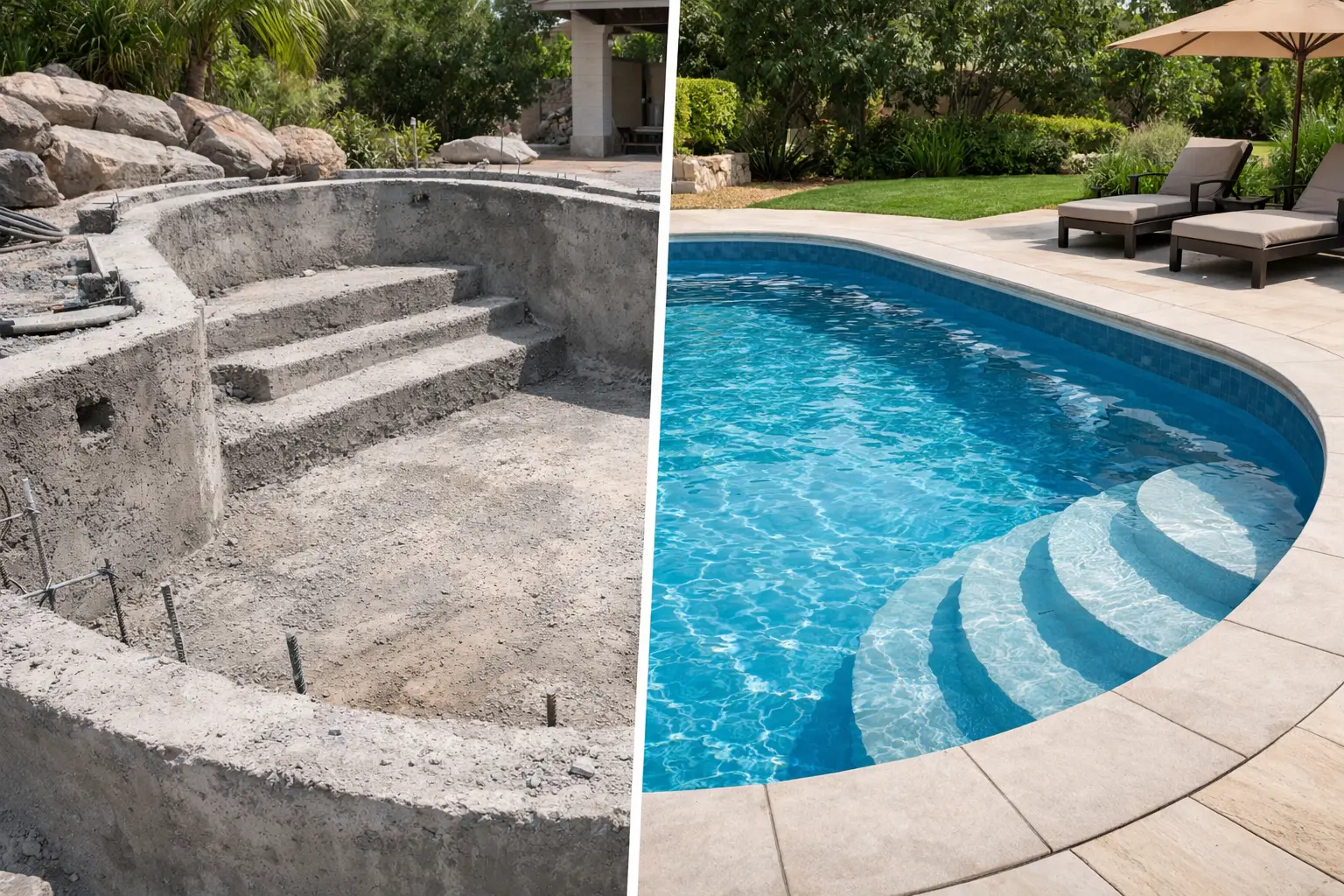
A backyard pool in Florida is not a once-a-decade whim. It is part of how your family lives, entertains, and cools off for years to come. That is why the choice between gunite vs fiberglass pools deserves more than a quick price comparison. The right answer depends on your lot, your design goals, your timeline, and how hands-on you want to be after the pool is finished.
For many Tampa Bay homeowners, this decision comes down to one simple question: do you want maximum design freedom, or do you want speed and simplicity? Both pool types can create a beautiful outdoor living space. The difference is how they get there and what ownership feels like over time.
Gunite vs fiberglass pools at a glance
Gunite pools are concrete pools built on-site. They are highly customizable in shape, size, depth, finish, and features. If you want a fully tailored backyard with a tanning ledge, custom spa, perimeter overflow, dramatic lighting, or a pool that wraps around your patio layout, gunite usually gives you the most freedom.
Fiberglass pools arrive as pre-manufactured shells that are installed into an excavated space. Because the shape is set in advance, the design process is more limited. Still, fiberglass can be an attractive option for homeowners who want a streamlined installation and a smooth, low-maintenance surface.
Neither is universally better. Gunite tends to win on customization and luxury design potential. Fiberglass often appeals to homeowners who prioritize fast installation and simpler upkeep.
Design flexibility matters more than most homeowners expect
This is where gunite often pulls ahead, especially for upscale outdoor living projects. A custom backyard rarely revolves around the pool alone. You may be planning a spa, sun shelf, water features, fire elements, an outdoor kitchen, or a patio layout that needs to feel cohesive from every angle.
With gunite, the pool is built to fit the space instead of asking the space to fit the pool. That is a big advantage on unusual lots, smaller backyards, or properties with specific views and elevation changes. If your goal is a resort-style look that feels integrated with the architecture of your home, gunite gives your design team much more room to work.
Fiberglass shapes have improved over the years, and many are sleek and attractive. But you are still choosing from available molds. If one of those sizes works beautifully for your yard, great. If not, compromises can show up quickly – whether that means giving up the Baja shelf you wanted or settling for a footprint that does not maximize the space.
Installation timeline and construction experience
Fiberglass usually has the advantage when timing is the top priority. Because the shell is manufactured off-site, installation can move faster once the product arrives and the site is ready. For homeowners who want a more predictable schedule and fewer moving parts, that can be appealing.
Gunite takes longer. It is a more involved construction process with excavation, steel, plumbing, shotcrete application, curing, finishing, tile, coping, decking, and startup. That timeline can feel like a drawback if you are only looking at the calendar.
But the bigger picture matters. A custom gunite project often includes a broader outdoor transformation, not just a pool dropped into the yard. If you are already investing in a full backyard experience, a longer timeline may be worth it to get the layout, features, and finish exactly right.
In other words, faster is not always better. Better fit can be the real value.
Cost is more than the initial build price
When comparing gunite vs fiberglass pools, homeowners often start with upfront cost. Fiberglass pools can be less expensive in some cases, particularly if the design is straightforward and the site conditions are favorable. A standard shell with limited custom work may offer a lower entry point.
Gunite pools often cost more at the start because you are paying for custom construction, labor, and design flexibility. The more tailored the project, the more that investment reflects your choices.
That said, focusing only on installation price can be misleading. Long-term value comes from how well the pool fits your property, how much enjoyment your family gets from it, and whether it supports the style of backyard you really want. A pool that feels like a compromise can be expensive in a different way.
For homeowners thinking about resale, a well-designed custom pool can also make a stronger visual statement. In markets like Tampa Bay, where outdoor living is part of the lifestyle, design quality matters.
Maintenance and surface feel
Fiberglass is often praised for its smooth surface and lower day-to-day maintenance demands. The gelcoat finish resists algae better than rougher surfaces, and many homeowners like the softer feel underfoot. That can mean less brushing and a somewhat simpler care routine.
Gunite requires more attention over time. Concrete surfaces are more porous, which can make them more prone to algae if chemistry and cleaning are neglected. Surface finishes also vary, and some textures are rougher than fiberglass.
Still, this is where professional service changes the conversation. If you plan to maintain the pool on your own, fiberglass may feel easier. If you want expert support after the build, gunite becomes much less intimidating. Many homeowners are happy to choose the pool they really want when they know ongoing care is part of the plan.
Durability in Florida conditions
Florida pool ownership comes with its own realities – heat, heavy rain, shifting soils, and long swim seasons. Both gunite and fiberglass can perform well here when installed properly, but they behave differently.
Gunite has a reputation for strength and longevity. It is a proven option for custom luxury pools and can handle complex designs, larger footprints, and integrated features very well. Over the long term, gunite surfaces may need refinishing, but the structural system itself is built for permanence.
Fiberglass shells are durable too, but they depend heavily on correct installation and soil conditions. In some situations, concerns about shell movement or fit can become more relevant, especially on sites with unique engineering challenges. That does not make fiberglass a poor choice. It just means site evaluation matters.
For many higher-end projects, gunite offers more confidence when the design is ambitious and the property calls for a tailored approach.
Features, finishes, and the luxury factor
If your vision includes more than a basic rectangle, gunite usually opens more doors. Infinity edges, custom spas, deep-end transitions, oversized sun shelves, beach entries, special tile details, and dramatic geometric layouts are all easier to execute in gunite.
That flexibility matters because today’s pool is rarely a standalone feature. It is part of an outdoor living environment. The pool needs to work with the patio, the pergola, the fire feature, and the way your family actually uses the yard.
Fiberglass can still look polished and modern, but it is typically less adaptable when you are aiming for a highly personalized design. If your goal is a true statement backyard, gunite usually aligns better with that level of ambition.
Which pool type is right for you?
If you want the shortest path to pool ownership, prefer a more standardized design, and value low-maintenance surfaces, fiberglass may be the better fit. It can be a smart choice for households that want simplicity and have a yard that matches available shell sizes.
If you want a pool designed around your home, your family, and the way you want to live outside, gunite often makes more sense. It is especially strong for homeowners who are thinking beyond the pool itself and planning a complete backyard experience.
That is why so many custom projects in the Tampa Bay area lean toward gunite. The climate supports year-round outdoor living, and homeowners are not just buying a place to swim. They are building a retreat, a gathering space, and a long-term upgrade to the way they use their home.
At Wahoo Pools, we see this decision as part of a larger design conversation, not a product comparison on a spreadsheet. The best pool is the one that fits your property, your priorities, and your vision for years ahead.
If you are weighing gunite vs fiberglass pools, start with the life you want in your backyard, not just the shell that goes in the ground. That is usually where the right answer becomes clear.