Gunite Pool Builder Tampa: Gunite vs Fiberglass vs Vinyl
Choosing between gunite, fiberglass, and vinyl in Florida? As an experienced gunite pool builder Tampa homeowners trust, we break down costs, soil, and durability.
When deciding between gunite, fiberglass, and vinyl liner pool construction in Florida, gunite stands out as the proven standard for structural durability and custom design. While fiberglass offers quick installation and vinyl presents a lower initial price tag, Florida soil dynamics, high water tables, and intense ultraviolet exposure make long-term structural integrity paramount. Working with a licensed gunite pool builder Tampa homeowners rely on ensures your backyard investment lasts for decades despite West Central Florida climate challenges.
Each construction method reacts differently to local ground conditions like shifting sandy soil, shelf limestone, and seasonal downpours. Understanding how shell materials, maintenance routines, permitting timelines, and overall long-term value compare across Hillsborough and Pinellas counties will help you make an informed decision for your outdoor living space.
How Florida Soil Affects Pool Shell Materials
Florida ground conditions present distinct structural challenges for swimming pool construction. The Tampa Bay area features shifting sandy soil, high subterranean water tables, and localized pockets of hardpan clay or shallow limestone. When heavy summer rainstorms saturate the ground, hydrostatic pressure increases significantly underneath buried pool shells. Fiberglass shells, which are pre-formed factory molds set into excavation pits, require continuous groundwater management during installation and maintenance. If drained improperly during high water table conditions, lightweight fiberglass or vinyl liners risk popping out of the ground or floating off their foundations.
Gunite pools consist of a thick structural shell crafted by pneumatically spraying concrete over a dense grid of steel rebar tied directly into the native earth. This monolithic concrete structure creates immense weight and structural rigidity, anchoring the pool securely against upward hydrostatic lift. In communities like Apollo Beach, Riverview, and South Tampa, where elevation levels drop near coastal canals and bayous, the heavy mass of a shot concrete shell provides unmatched stability against ground movement and water pressure changes.
Vinyl liner pools utilize galvanized steel or polymer panel walls set on a packed sand or vermiculite base. While flexible, these walls do not offer structural resistance against shifting ground or rising groundwater. Heavy seasonal rainfall can cause water to seep behind the flexible liner, creating unsightly float bubbles, wrinkles, or panel shifts. For Florida backyards with fluctuating moisture levels and active soil profile shifts, concrete gunite offers superior resilience over flexible liner systems.
Gunite vs Fiberglass vs Vinyl Cost and Lifespan
Evaluating pool construction materials requires comparing immediate installation expenses with long-term ownership costs over twenty to thirty years. Vinyl liner pools feature the lowest upfront price, but their thin vinyl membrane must be replaced every seven to ten years due to harsh sun exposure, chemical degradation, and tear risks. Replacing a liner in the Tampa heat requires complete draining, shell re-smoothing, and liner replacement, generating repeating ownership expenses across the pool lifetime.
Fiberglass shells fall in the middle price bracket upfront. Their smooth gelcoat finish resists algae growth, keeping chemical usage slightly lower during routine maintenance. However, gelcoat finishes can fade under intense tropical ultraviolet rays or crack over time. Repairing damaged gelcoat requires specialized thermal patching that rarely matches the original factory shade perfectly, and full shell resurfacing is exceptionally difficult once the factory coating wears down.
- Gunite pools: Initial high investment, 30+ year structural lifespan, renewable quartz or pebble finishes every 12 to 15 years.
- Fiberglass pools: Moderate initial investment, 25-year structural lifespan, difficult gelcoat surface repairs after UV degradation.
- Vinyl liner pools: Lowest initial investment, 10 to 15-year structural lifespan, mandatory vinyl membrane replacement every 7 to 10 years.
Gunite pools represent a higher initial capital investment, but they offer an virtually unlimited structural lifespan. The heavy reinforced concrete shell remains intact for generations, while interior finishes like wet-edge quartz or aggregate pebble plaster can be resurfaced seamlessly every twelve to fifteen years. When factoring in property resale value, custom home buyers in Lithia, Valrico, and St. Petersburg consistently prefer permanent custom concrete pools over pre-manufactured shells or vinyl liners.
Is Fiberglass or Gunite Better for Tampa Heat
The intense Florida sunshine and year-round warm temperatures subject outdoor building materials to severe thermal expansion, contraction, and ultraviolet stress. High humidity levels combined with warm water temperatures also accelerate algae growth if water circulation and surface materials are not properly engineered. Understanding how shell materials react to intense heat helps homeowners avoid expensive surface repairs after just a few swim seasons.
Fiberglass pool shells absorb heat quickly, which can raise water temperatures significantly during July and August. While warmer water sounds appealing in early spring, mid-summer water temperatures in an unshaded fiberglass shell can top ninety degrees, making swims unrefreshing. Additionally, dark-colored gelcoat finishes absorb excessive heat and UV energy, accelerating fading, chalking, and microscopic surface cracking under the intense solar radiation common throughout Hillsborough County.
Concrete gunite structures provide exceptional thermal mass, helping temper extreme water temperature spikes during peak summer months. Interior finishes like crushed quartz or smooth aggregate plaster resist chemical degradation and withstand brutal sunlight without blistering or peeling. Paired with a modern heat pump, saltwater chlorination system, and water features that promote evaporative cooling, gunite construction delivers a far more comfortable year-round swimming environment in warm coastal climates.
Why Select a Gunite Pool Builder Tampa
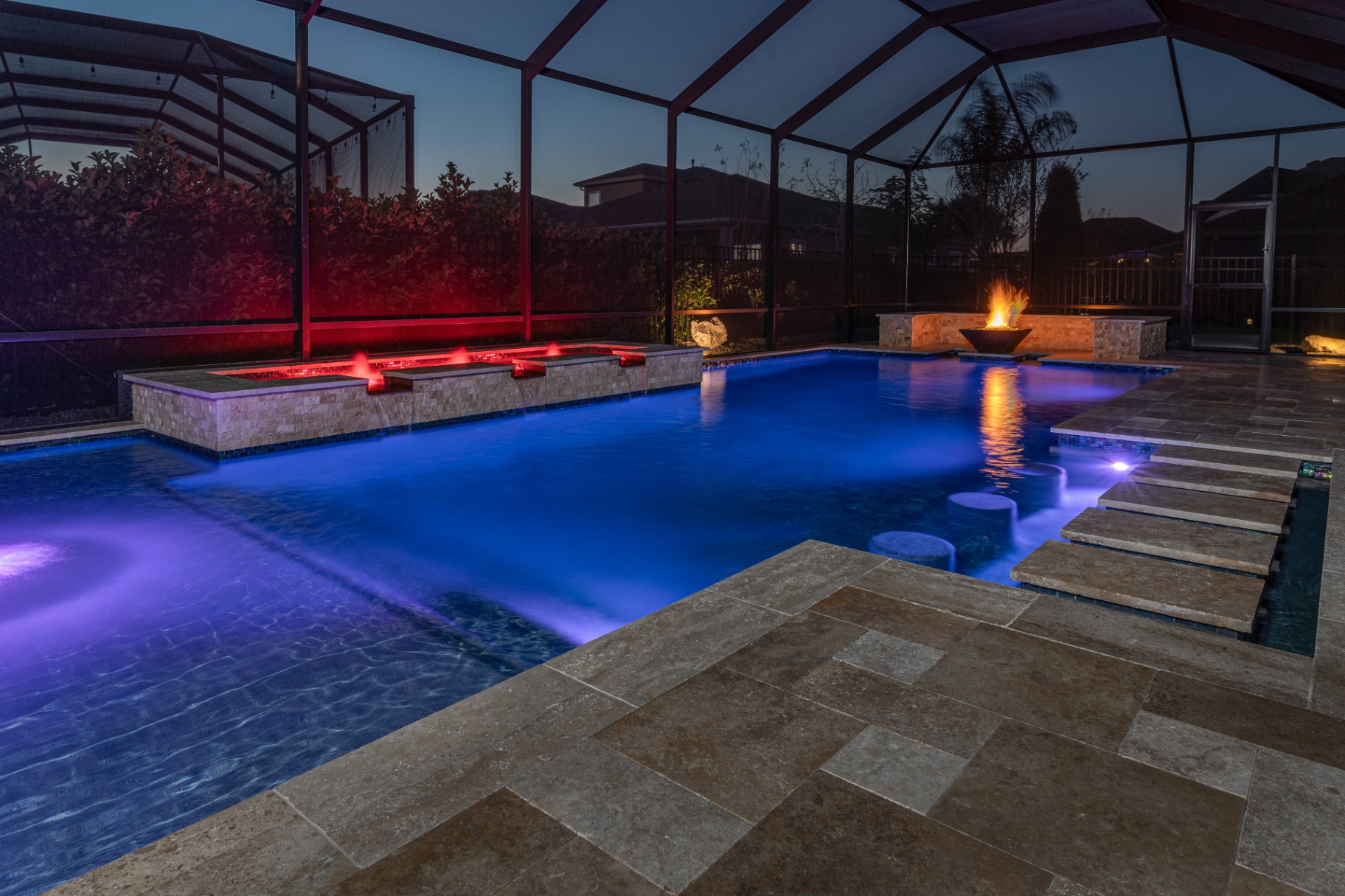
Partnering with a dedicated gunite pool builder Tampa residents rely on gives you access to full structural customization, matching your exact lot dimensions in Riverview, Brandon, or Wesley Chapel. Because gunite is applied directly over custom-built steel rebar cages, your pool can take any shape, depth, or configuration imaginable. You can incorporate zero-entry beach accesses, custom tanning ledges, swim-up bars, built-in spa benches, and integrated rock waterfalls without structural compromises.
Fiberglass pools are restricted to pre-manufactured factory molds designed for transport on flatbed trucks along interstate highways. This limits max width to sixteen feet and caps total depth options. If your backyard features narrow property lines, angled utility easements, or steep grade changes, fitting a standard rectangular or freeform fiberglass shell can leave wasted space or require awkward retaining wall structures. Custom features like splash pads or integrated spas must be purchased as separate pre-molded units.
Vinyl liner pools allow flexible footprint shapes, but structural depth and internal features remain constrained by wall panel kits. Features like sun shelves, steps, and benches are typically constructed using pre-molded plastic inserts attached to the steel wall frames. Over time, the seams between these plastic drop-in features and the vinyl liner can leak or show noticeble color variations. Gunite allows every bench, step, ledge, and deep end to be poured as a continuous, unified structure.
Navigating Permitting and Inspections in Hillsborough County
Constructing a swimming pool anywhere in Tampa Bay requires strict adherence to local building codes, setback regulations, and safety mandates. Engineering documentation must account for wind load requirements, soil bearing capacity, electrical grounding, and barrier compliance. Because gunite construction uses site-specific engineered rebar plans, licensed contractors can tailor structural calculations to satisfy strict municipal reviewers in Riverview, St. Petersburg, and unincorporated Hillsborough County.
Fiberglass shell installations require specific crane access clearance, heavy machinery hauling permits, and strict gravel bedding inspections to verify proper backfilling beneath shell curves. In tightly spaced residential developments across Brandon and Valrico, maneuvering forty-foot delivery trailers and massive cranes across narrow side yards can prove challenging or lead to turf and driveway damage. Gunite delivery trucks pump concrete through flexible hoses, protecting existing landscapes during heavy construction phases.
From initial soil excavation through concrete shot-pour, plumbing rough-ins, steel inspections, and final deck installations, working with an experienced local pool contractor guarantees every phase meets Florida Building Code specifications. Building a high-quality pool requires clear communication, detailed engineering drawings, and hands-on site management to navigate summer rain delays safely. Contact Wahoo Pools today at 813-699-3282 to schedule your free design consultation and start planning your custom backyard retreat.
Frequently asked questions
Which pool construction type lasts the longest in Florida?
Gunite concrete pools offer the longest lifespan in Florida, lasting thirty years or more. While fiberglass shells last twenty to twenty-five years before gelcoat degradation occurs, and vinyl liners require replacement every seven to ten years, gunite shells remain structurally sound for decades and can be resurfaced repeatedly.
Can high water tables pop a pool out of the ground in Tampa?
Yes, high groundwater levels in Tampa Bay can float fiberglass shells or bulge vinyl liners if drained improperly. Heavy gunite concrete pools resist hydrostatic lift naturally due to their massive structural weight and deep steel rebar anchoring, making them significantly safer against shifting groundwater.
How long does gunite pool construction take compared to fiberglass?
Fiberglass shells can be installed in three to five weeks after excavation, whereas gunite pool construction typically takes eight to twelve weeks. However, gunite provides complete custom design freedom, far superior structural integrity, and perfect adaptability to complex Florida yard layouts and soil profiles.
Are screen enclosures easier to build around gunite pools?
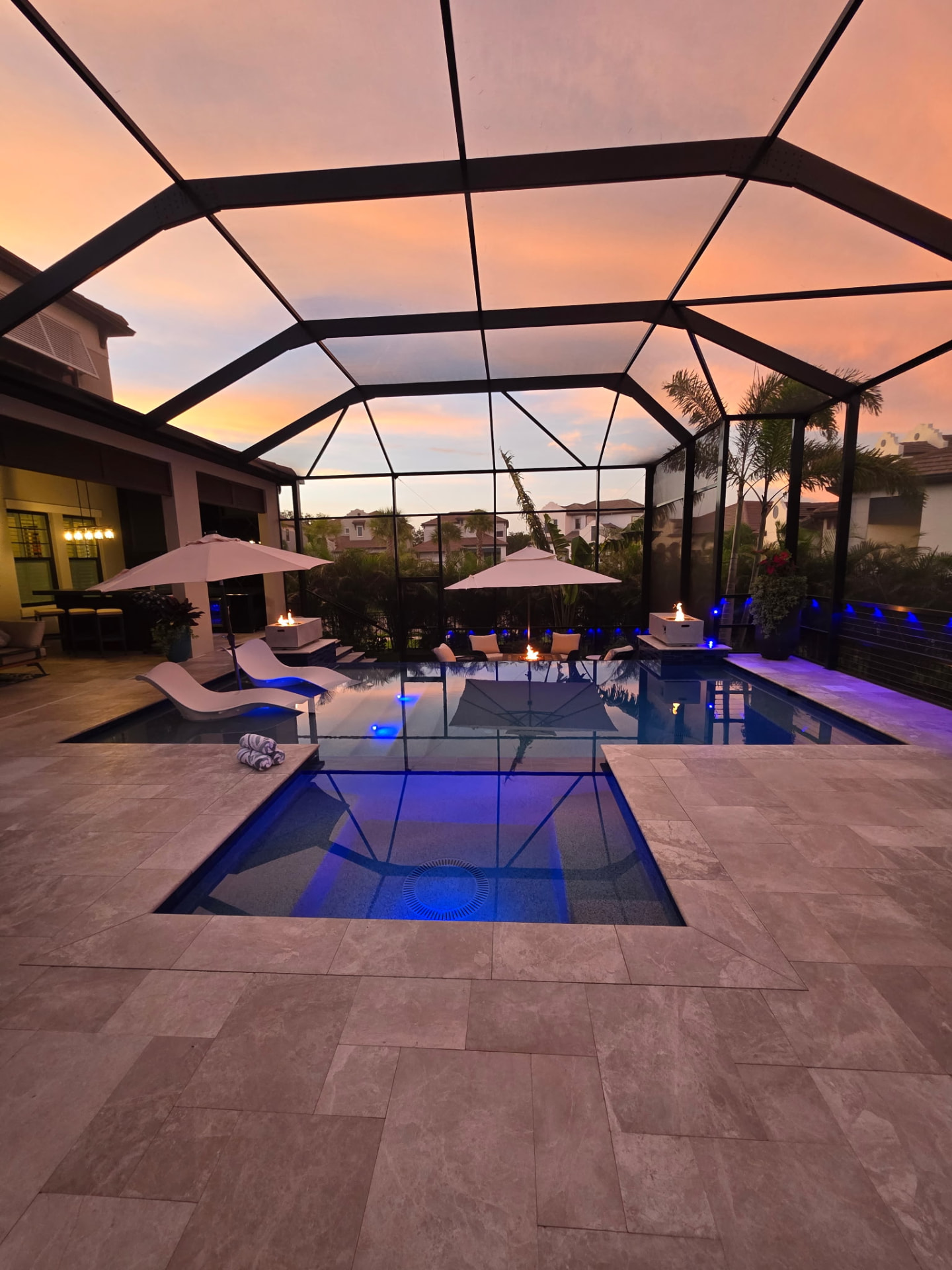
Yes, screen enclosures integrate seamlessly with gunite pools because the heavy structural concrete beam provides solid anchoring for aluminum cage footers. This integrated foundation offers maximum stability during severe summer storms and high tropical wind events across coastal Tampa Bay.