

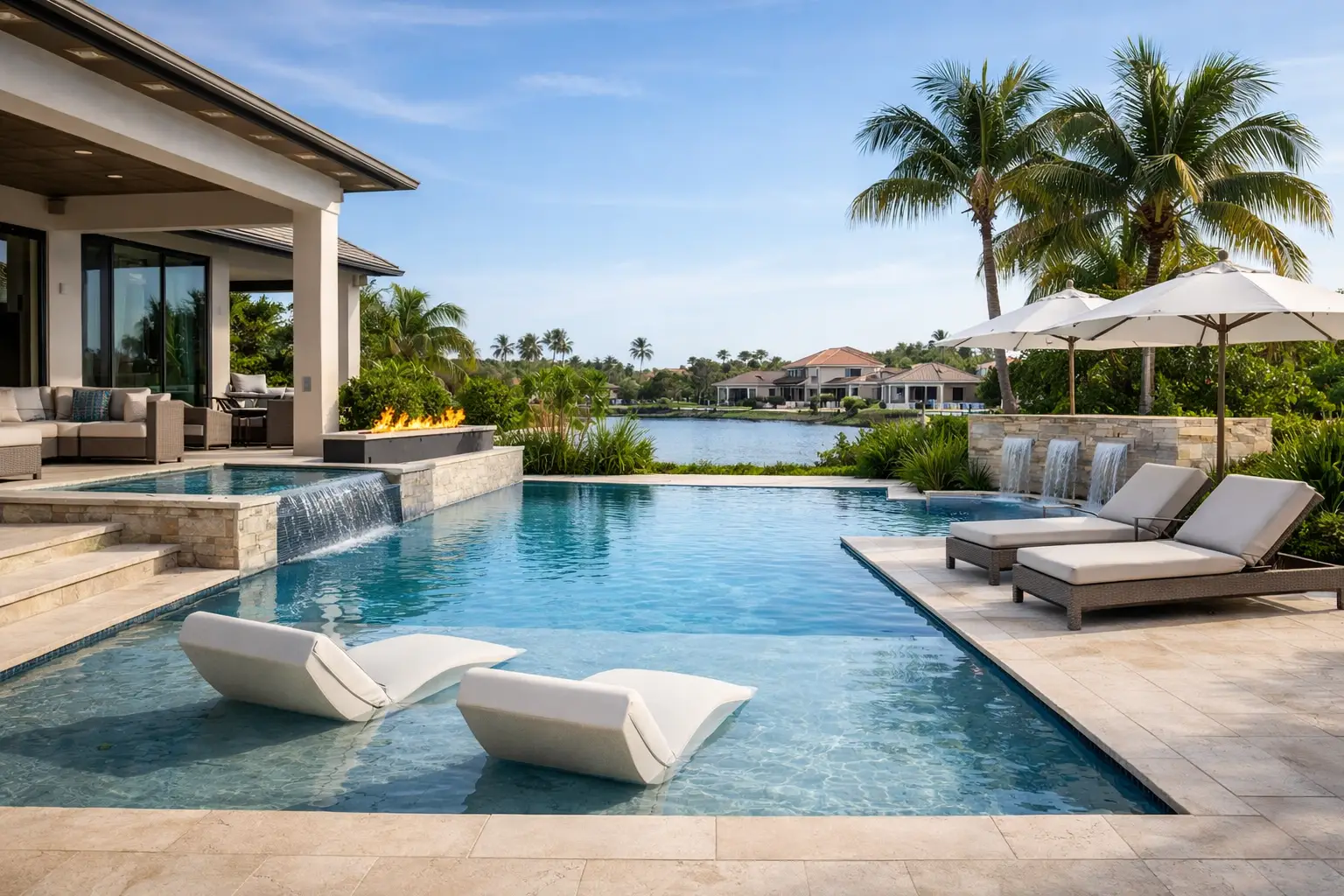
A beautiful pool can raise your home’s value, but the real goal is simpler than that – you want a backyard that feels good to live in. This modern pool design guide is built for Florida homeowners who want more than a basic rectangle in the ground. The best modern pools look clean and elevated, but they also fit the way your family relaxes, entertains, and keeps up with day-to-day maintenance.
Modern design is often mistaken for minimal design alone. In practice, the strongest modern pools balance clean lines with comfort, visual impact with durability, and luxury with everyday use. If you are planning a new pool or updating an older one, the right design choices should make your outdoor space feel intentional from every angle.
What modern pool design really means
A modern pool is not defined by one shape, tile, or finish. It is defined by restraint, proportion, and how well each feature works together. That usually means strong geometry, integrated materials, and a layout that feels connected to the home rather than dropped into the yard as a separate project.
For many Tampa Bay homeowners, modern design also means creating a full backyard environment instead of focusing only on the pool shell. A spa, sun shelf, outdoor kitchen, fire feature, and patio can all belong in the same design language when they are planned together. That is where modern spaces tend to feel more polished than pieced together.
There is also a practical side to this style. Modern pools often use simpler forms and more efficient circulation layouts, which can make cleaning and long-term care more manageable. The visual result is high-end, but the day-to-day ownership experience should feel easier, not more complicated.
Start the modern pool design guide with layout
Before choosing finishes or water features, look at the layout. This is the part homeowners often rush, even though it has the biggest effect on how the finished project feels. A modern pool should respond to your home’s architecture, sightlines, yard shape, and how you plan to use the space.
If your home has strong horizontal lines, wide windows, or a contemporary patio, a linear pool layout often feels natural. If your lot is tighter, a plunge pool or compact geometric design may give you a more refined result than trying to force a large pool into limited space. Bigger is not always better. Proportion matters more.
Think about where you will spend time outside when you are not swimming. Do you want lounge space in full sun, a shaded conversation area, room for kids to play, or a direct visual focal point from inside the house? A modern pool works best when it supports those priorities instead of competing with them.
Shape, scale, and clean lines
Modern pools usually lean toward geometric shapes, but there is still room for variation. Rectangles remain popular because they pair well with contemporary homes and create a crisp, organized look. L-shaped pools can define separate activity zones. Narrow lap-style pools work well on side yards or long lots. Small plunge pools have also become a smart option for homeowners who want a luxury look without committing to a large footprint.
The key is discipline. Too many offsets, curves, and decorative flourishes can make a design feel dated quickly. Clean lines tend to hold up better over time, especially when paired with quality materials.
That said, modern does not have to mean cold. Scale, water color, lighting, and surrounding materials all soften the space. The goal is not starkness. It is clarity.
Materials make the difference
One of the fastest ways to elevate a pool design is through the finish palette. In a modern setting, materials should look intentional and cohesive. That usually means choosing fewer materials and using them well.
Large-format pavers, porcelain decking, natural stone accents, and streamlined coping profiles all contribute to a cleaner appearance. Glass tile can add a sleek finish at the waterline or on a raised spa wall, but it works best as a controlled accent rather than an overload of texture and color. Interior finishes in soft gray, deep blue, or refined white tones can shift the water color dramatically, so this choice deserves real attention.
Florida conditions matter here. A material that looks great in a showroom still has to handle sun exposure, rain, heat, and regular use. Some surfaces stay cooler underfoot than others. Some require more upkeep. Some show dirt, scale, or leaf debris more easily. A modern look should still be grounded in real-world performance.
Features that add luxury without clutter
The best modern pool features feel integrated. They do not look added on at the last minute. If you want a spa, tanning ledge, raised wall, or spillway, those elements should be part of the original design concept.
Sun shelves remain one of the most requested features for good reason. They create a resort-style look, give families a comfortable place to relax, and work well with loungers or shallow play space. Integrated spas continue to be popular because they add visual structure and year-round enjoyment. Fire bowls, linear fire features, and scuppers can also create a strong focal point when used carefully.
There is a trade-off, though. More features can mean higher construction costs, more equipment complexity, and more maintenance. A pool with every possible upgrade is not automatically better. Often, a few well-executed features create a much more luxurious result than trying to include everything.
Lighting and water effects in a modern pool design guide
Lighting is one of the most overlooked parts of pool design, and it is especially important in modern spaces. During the day, your pool should feel crisp and inviting. At night, it should feel calm, elegant, and safe.
LED lighting gives homeowners flexibility in color and mood, but many modern projects look best with a restrained approach. Soft white or subtle color changes usually age better than dramatic, constantly shifting effects. Landscape lighting around the pool should also support the architecture and outdoor living areas instead of drawing attention in too many directions.
Water features should follow the same rule. A clean sheet waterfall or a simple spillway can add movement and sound without overwhelming the design. If the visual language is modern, the feature should be precise and controlled.
Design for the way you actually live
A pool can look stunning on paper and still miss the mark if it does not fit your household. Families with children may want generous shallow space, step visibility, and room for active use. Couples who entertain may care more about integrated seating, a spa, and a patio flow that supports dining and conversation. Homeowners renovating an older pool may prioritize easier upkeep and equipment upgrades over expanding the footprint.
This is where a real modern pool design guide should be honest: trends matter less than lifestyle fit. Infinity edges, dark finishes, and dramatic raised walls can look incredible, but they are not right for every property or every budget. A successful design reflects how you want to use the space on a Tuesday afternoon, not just how it photographs on installation day.
Don’t separate design from maintenance
One of the smartest things you can do during planning is ask how each design decision affects long-term care. Contemporary pools often appear simple, but the details behind that simplicity matter. Waterline tile choice, decking texture, equipment placement, drainage, and circulation planning all affect how the pool performs over time.
For example, sleek surfaces with fewer visual breaks can be easier to clean, but certain finishes may show water chemistry issues faster. Decorative edges and specialty features can add visual appeal, but they may create more areas that collect debris. Even the size of the pool influences heating, cleaning, and chemical costs.
That is why design-build continuity matters. When the same team is thinking about concept, construction, equipment, and future service, the result is usually more cohesive. Homeowners do not just need a beautiful plan. They need a pool they can enjoy without constant frustration.
Bringing the whole backyard together
The strongest pool projects do not stop at the waterline. A modern pool looks best when the surrounding patio, kitchen, seating areas, and landscape plan feel connected. This does not mean every surface must match. It means the space should feel like one finished environment.
In Florida, shade planning is especially important. Pergolas, covered lanais, and thoughtful seating zones can make the backyard more usable through long summer months. Outdoor kitchens and fire features extend the value of the space beyond swimming alone. When these elements are designed as part of the same vision, the backyard feels more custom and more complete.
For homeowners who want a guided experience, working with one company from concept through long-term care can remove a lot of uncertainty. Wahoo Pools approaches backyard design that way because the best results come from treating the pool, hardscape, features, and maintenance plan as one connected investment.
A modern pool should feel current, but it should also feel right for your home five and ten years from now. If your design choices are grounded in layout, proportion, material quality, and the way your family actually lives, you will not need a flashy trend to make the space feel special. You will simply step outside and know it was designed well.