How to Build the Ultimate Outdoor Living Space in Tampa
Transforming your backyard with a custom outdoor living space in Tampa requires smart shade choices, durable sun shelf furniture, and expert structural design.
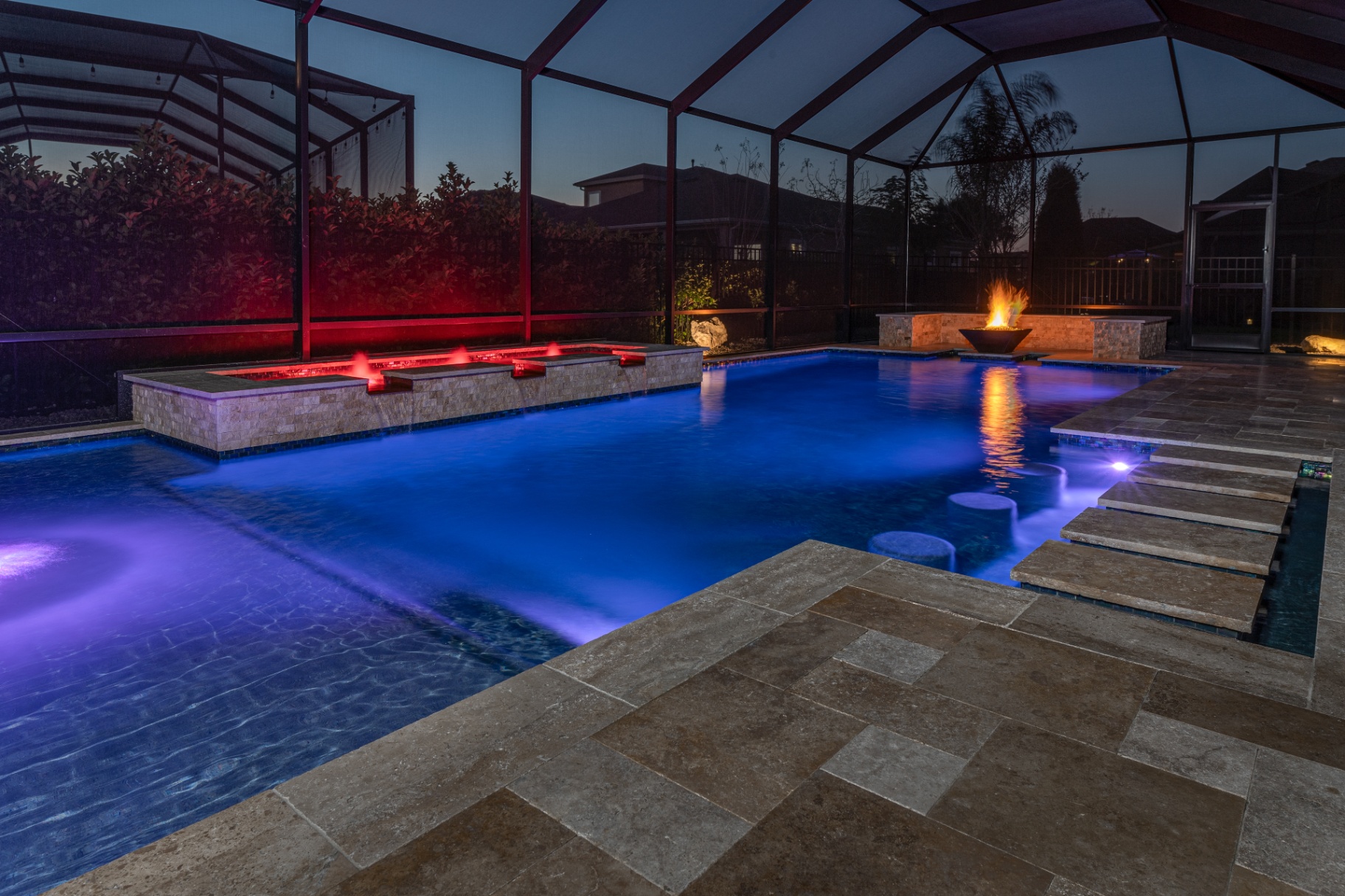
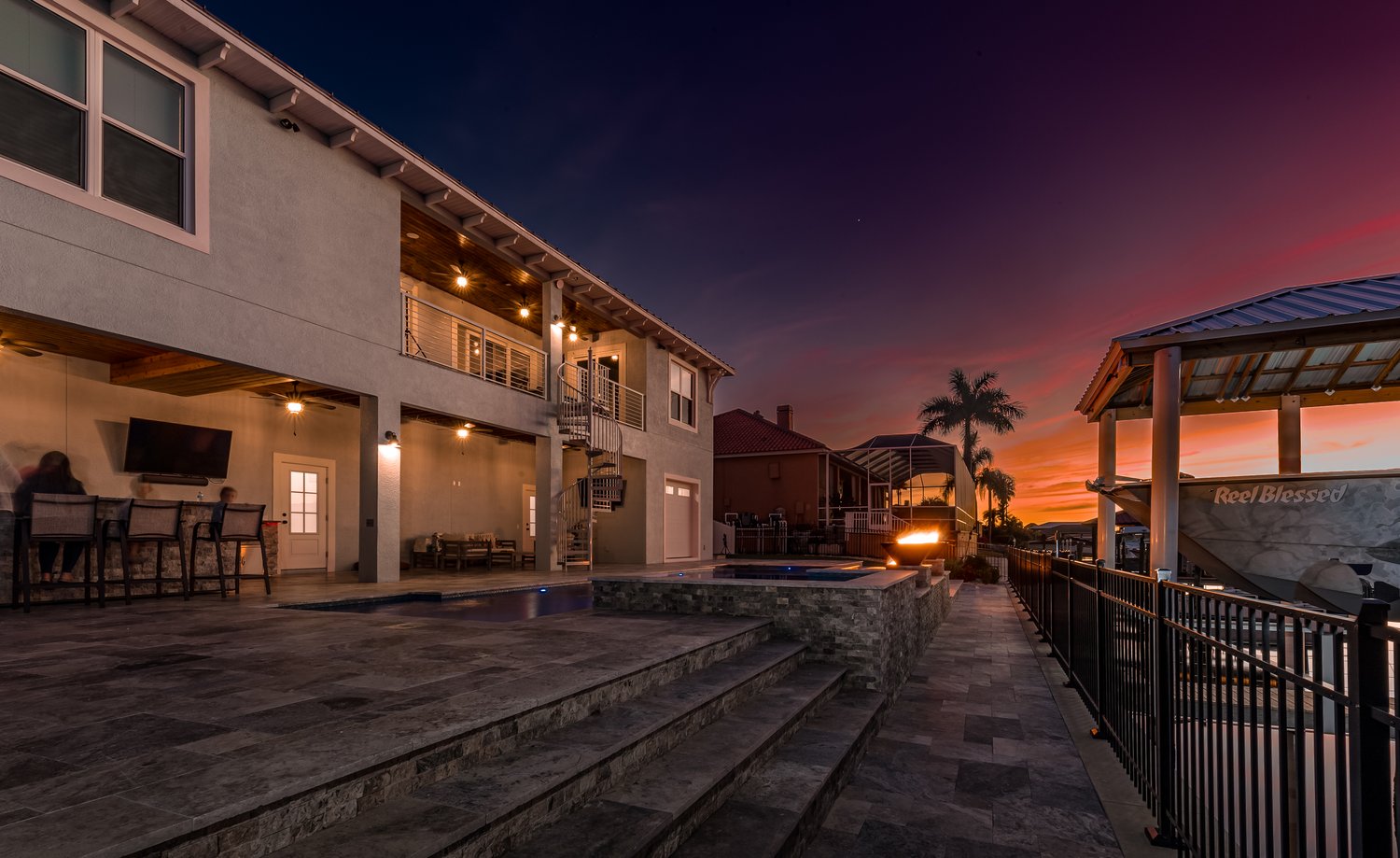
Designing a comfortable outdoor living space in Tampa requires a strategic balance between direct sunlight exposure, water features, and engineered structural shade. Because Central Florida experiences intense ultraviolet radiation and high summer temperatures, a successful backyard design pairs custom gunite pool elements like tanning ledges with heavy-duty shade structures and weather-resistant furniture. Prioritizing proper orientation, wind-resistant materials, and drainage prevents high heat from driving you indoors during peak afternoon hours.
At Wahoo Pools, we have built over 1,200 custom gunite pools across Tampa Bay, and we see firsthand how smart layout planning elevates everyday backyard use. By incorporating louvered pergolas, built-in pool ledge loungers, and architectural cabanas during the initial structural engineering phase, homeowners create seamlessly connected resort-style environments. Integrating these components from day one guarantees proper electrical wiring, gas plumbing, and concrete footings without costly retrofits later.
How Florida Sun Exposure Dictates Backyard Shade Design
The intense Central Florida climate demands shade solutions built specifically for extreme heat, moisture, and UV degradation. Standard wood arbors often struggle under Hillsborough County summer weather, where continuous sun followed by heavy afternoon rainstorms causes timber to warp, check, and rot over time. Powder-coated aluminum pergolas and solid insulated composite structures have become the gold standard across Brandon, Valrico, and Riverview. These engineered systems reflect thermal energy, require virtually zero maintenance, and will not degrade under endless cycles of humidity and rain.
When positioning a pergola or shade sail over your pool deck, calculating solar angles throughout the year is essential. During June, the sun sits almost directly overhead at noon, while winter months bring a lower southern angle. Adjustable louvered pergolas allow you to rotate roof blades up to 140 degrees, letting you block blinding midday glare while opening the roof to catch cooler evening breezes. Placing shade zones directly adjacent to deep water or tanning shelves creates natural cooling transitions across the entire deck area.
For homeowners near Apollo Beach and St. Petersburg, ocean breeze and salt air accelerate corrosion on lower-grade hardware. Choosing marine-grade stainless steel fasteners, structural aluminum beams, and high-performance architectural coatings prevents premature pitting and rust. Furthermore, shade structures within a screen enclosure or open pool deck must be engineered for local wind loading requirements, ensuring your investment remains structurally sound during tropical weather events.
In-Pool Furniture: Maximizing Your Sun Shelf Comfort
A shallow sun shelf, also known as a Baja shelf or tanning ledge, transforms a standard gunite pool into a luxury resort splash zone. However, selecting furniture for inside the pool requires specialized materials designed to sit submerged in chlorinated or saltwater environments. Standard patio chairs float, discolor, or leach chemicals into the water. High-density resin furniture engineered specifically for in-pool use uses heavy ballast systems, fill ports, or structural weight to stay anchored on gunite surfaces without scratching the plaster or pebble finish.
Water depth dictates which in-pool furniture will perform best on your tanning shelf. Most custom shallow ledges are built between six and twelve inches deep. For shallow ledges up to nine inches, contoured chaise loungers provide an ergonomic way to recline right in the water. For deeper ledges reaching twelve inches or more, tall deep-seating chairs or submerged bistro tables with umbrella anchors allow adults to sit upright while keeping their feet cool.
Adding bubbler jets, sheer descent water curtains, or cantilevered pool umbrellas alongside submerged loungers creates a sensory experience that lowers ambient surface temperatures. When building a custom outdoor living space in Tampa, embedding dedicated stainless steel or composite umbrella sleeves directly into the gunite shelf during pool construction provides clean, flush-mounted shade supports that hold large umbrellas steady against summer breezes.
Is an Attached Cabana or Freestanding Pergola Better?
Choosing between an attached roof extension and a freestanding backyard pergola depends on your home layout, property boundaries, and how you intend to navigate between indoor and outdoor spaces. An attached solid-roof cabana acts as a direct extension of your home ceiling, creating a seamless transition from the main living room or kitchen to the pool patio. This approach provides complete rain protection, allowing you to enjoy outdoor dining even during heavy summer downpours in Lithia or Wesley Chapel.
Freestanding pergolas offer greater architectural flexibility and can be positioned anywhere within local utility and setback easements. Placing a freestanding pergola on the far side of your pool creates a distinct destination zone, encouraging guests to walk across custom paver decking or stepping stones over water features. However, freestanding structures require dedicated concrete footings poured deep into the sandy Florida soil before laying deck pavers or gunite decking.
- Attached Cabanas: Maximum weather protection, seamless house transition, higher structural tie-in cost.
- Freestanding Pergolas: Flexible placement, ideal focal point across the pool, requires independent footings.
- Louvered Aluminum Roofs: Adjustable shade and rain protection, modern aesthetic, low structural maintenance.
- Shade Sails: Lightweight and cost-effective, ideal for wide spans, requires heavy anchor posts.
- Cantilevered Umbrellas: Easy to move, low initial cost, must be closed during high wind warnings.
Integrating Fire, Water, and Shade for Year-Round Comfort
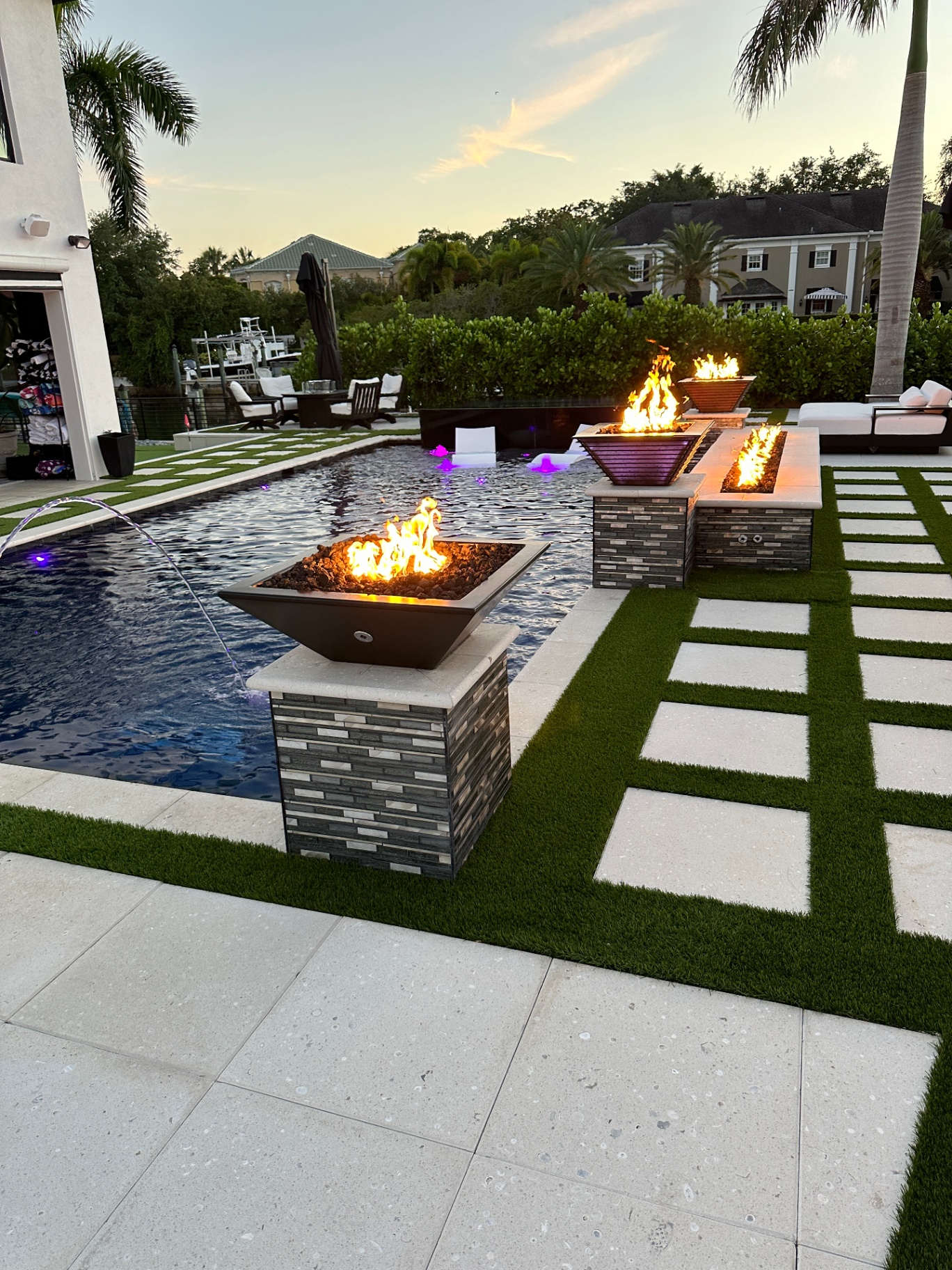
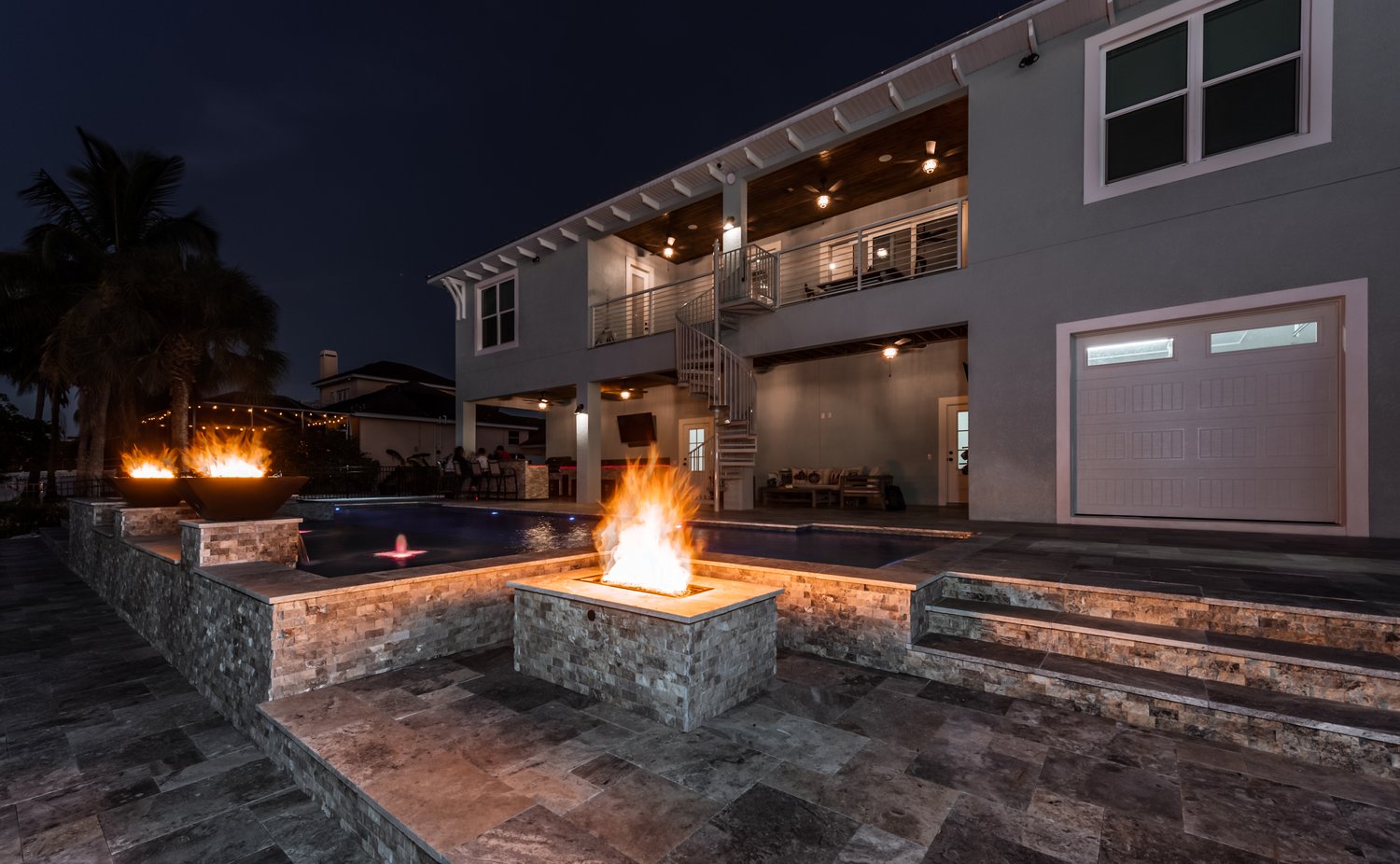
Florida backyards enjoy a year-round outdoor season, but staying comfortable requires managing both extreme summer humidity and chilly winter evenings. Integrating fire features alongside shade structures creates a balanced environment usable twelve months a year. Gas-powered fire tables or raised gunite fire pits positioned under high-clearance pergolas provide warmth during cold snaps in January without trapping smoke. Equipping pergolas with hidden infrared heaters and ceiling fans ensures optimal comfort regardless of the temperature outside.
Pre-planning gas, electrical, and drainage rough-ins during early pool excavation is critical for a clean finish. Running underground conduit for low-voltage LED strip lighting, sound systems, and motorized shade screens inside pergola posts prevents exposed wiring along paver joints. Incorporating high-pressure misting lines into structural shade beams can lower surrounding air temperatures by up to fifteen degrees during blistering August afternoons.
Planning Your Dream Outdoor Living Space in Tampa
Building a cohesive backyard resort requires addressing unique regional construction requirements in Hillsborough and Pasco counties. High water tables, sandy soil conditions, and strict municipality permitting require expert structural engineering. Proper grade elevations and deck drainage channels must be established early so that torrential rain runoff moves away from structural footings, pool water, and house foundations.
By working with a licensed custom pool builder with over a decade of local experience, you ensure that every pool feature, deck paver, shade structure, and furniture layout works together harmoniously. Wahoo Pools manages every detail from preliminary 3D design rendering and permitting to gunite placement and final fixture installation. To start designing your custom outdoor oasis, contact Wahoo Pools at 813-699-3282 for a free design consultation.
Frequently asked questions
What materials are best for outdoor pergolas in Tampa Bay?
Powder-coated aluminum and high-performance composite materials are best for the Tampa climate. Unlike wood, which warps, rots, and attracts termites in high humidity, structural aluminum resists rust, withstands high wind load requirements, and requires minimal maintenance despite intense summer heat and coastal salt air.
Can in-pool furniture stay in the pool year-round?
Yes, high-quality resin and UV-stabilized in-pool loungers are built to remain submerged continuously. They resist fading from intense sunlight and hold up against standard pool chemicals. However, periodic cleaning is recommended to prevent calcium buildup and algae accumulation along the water line.
Do I need a building permit for a pergola next to my pool in Hillsborough County?
Yes, any permanent shade structure, pergola, or cabana requires structural engineering and building permits from local county or municipal building departments. Structures must comply with Florida Building Code standards, including wind load resistance and property setback limits relative to property lines and pool edges.
How deep should a pool sun shelf be for ledge loungers?
Most ledge loungers and in-pool chairs are engineered for water depths between 6 and 12 inches. If your sun shelf is deeper than 12 inches, deeper water models or submerged tables with upright chairs are recommended so the furniture stays anchored and comfortable.