

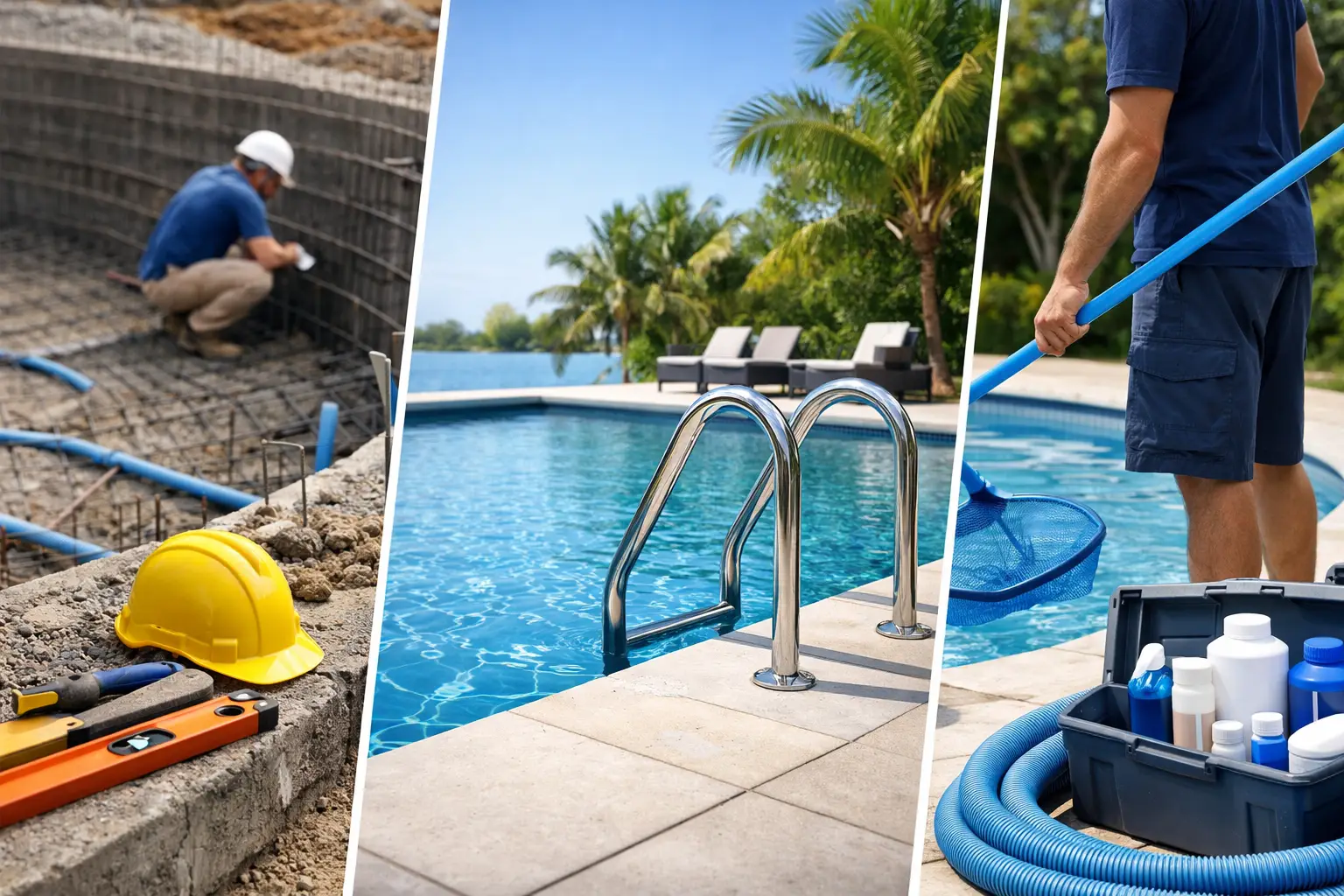
A beautiful pool is not just a construction project. It is a long-term part of how your family lives at home. That is why swimming pool construction installation and maintenance should never be treated as separate conversations. The way a pool is designed and built affects how it performs, how much care it needs, and how enjoyable it feels years after the water goes in.
For homeowners in the Tampa Bay area, that matters more than most people realize. Florida pools work hard. They face heavy sun, frequent rain, long swim seasons, shifting temperatures, and regular use by families who expect their backyard to feel like a private resort. A pool that looks impressive on day one but creates constant upkeep headaches later is not a smart investment. The better approach is to plan the full life of the pool from the start.
Why swimming pool construction installation and maintenance belong together
Some homeowners begin with shape, tile, and finish choices, then think about service later. That is understandable, but it often leads to avoidable compromises. Equipment placement, plumbing layout, circulation design, finish selection, automation, and deck drainage all influence what ownership feels like after installation.
A well-built pool should do more than fit the space. It should circulate water efficiently, support easy cleaning, protect surfaces, and give you dependable performance during Tampa Bay’s long hot months. If maintenance is considered early, the result is usually lower operating stress, fewer service issues, and a backyard that stays ready for guests, weekends, and family time.
This is especially true for custom projects. A luxury pool with a spa, fire feature, sun shelf, outdoor kitchen, or plunge area can be stunning, but each added feature changes how the system should be planned. More water features may require stronger hydraulic design. More integrated outdoor living elements call for better coordination across trades. The payoff for getting that right is simple – your pool looks elevated and works the way it should.
Construction decisions that shape long-term ownership
The early design phase is where many of the most important maintenance decisions are quietly made. Pool owners often focus on the visible finishes, but the hidden systems behind the walls matter just as much.
Circulation and plumbing matter more than most people think
Good circulation is one of the foundations of clean, clear water. If return lines, skimmers, and drains are poorly planned, certain areas may not move water effectively. That can lead to dead spots, debris buildup, uneven chemical distribution, and extra service demands.
A thoughtful installation takes the pool’s exact shape and features into account. A geometric pool, a freeform layout, and a compact plunge pool each behave differently. The right plumbing design helps water move consistently, which supports sanitation and protects surface quality over time.
Equipment choices affect cost and convenience
Not all pool equipment creates the same ownership experience. Pumps, filters, heaters, chlorination systems, and automation controls should be chosen based on how the pool will actually be used. A family that swims often, entertains regularly, and wants spa heat on demand has different needs than a homeowner building a smaller, lower-use pool.
There is always a trade-off. Higher-performing equipment and automation can cost more upfront, but they often improve efficiency, comfort, and ease of care. On the other hand, overspending on features you will rarely use does not always make sense. The right setup is the one that matches your lifestyle, not the one with the longest feature list.
Finish materials influence both appearance and upkeep
Interior finish, tile, coping, and deck materials all affect maintenance. Some surfaces are easier to clean. Some hold up better against weather and heavy sun. Some provide a more upscale visual result but require more attentive care to preserve that look.
For Florida homeowners, slip resistance, heat performance, and stain resistance deserve as much attention as color and style. A deck that looks great in photos but becomes uncomfortably hot in summer can change how often the space gets used. A finish that does not fit the home’s traffic level may age faster than expected. Good design balances beauty with real-life durability.
What a strong pool installation process should include
Installation is where plans become performance. A polished design means very little if execution is inconsistent. Homeowners should expect a process that feels organized, transparent, and guided from start to finish.
That begins with site evaluation and planning. Grading, drainage, access, soil conditions, setbacks, and local permitting all influence the timeline and the final build. In many Tampa Bay neighborhoods, those details can affect everything from equipment location to deck layout to how quickly a project moves forward.
From there, excavation, structural work, plumbing, electrical, finish application, and startup all need careful coordination. This is one reason many homeowners prefer a single experienced team instead of trying to manage multiple contractors themselves. When design, build, and service are aligned, there is usually better accountability and fewer gaps between what was promised and what gets delivered.
For homeowners who want speed without sacrificing quality, quicker-build options such as plunge pools or accelerated build programs can be appealing. They are not right for every property or every vision, but they can be a smart fit for families who want a refined backyard upgrade on a faster timeline.
Swimming pool maintenance after installation
Once the pool is filled and running, maintenance becomes the difference between stressful ownership and confident enjoyment. New pool owners sometimes assume pool care is mostly skimming leaves and adding chemicals. The reality is broader. Water chemistry, filter condition, circulation, surface protection, equipment inspections, and seasonal adjustments all matter.
Water chemistry protects more than water clarity
Balanced water is about more than appearance. It helps protect the finish, tile line, equipment, and swimmer comfort. When chemistry drifts, problems can build slowly. Etching, scaling, cloudy water, algae growth, and shortened equipment life often begin with small imbalances that go uncorrected.
Florida weather adds another layer. Heavy rain can dilute chemistry. Intense sun can affect sanitizer demand. Frequent use can shift the water faster than some homeowners expect. Consistent testing and adjustment are what keep a pool stable.
Equipment service keeps small issues from becoming expensive ones
Pumps, filters, heaters, salt systems, lights, and automation controls need periodic attention. A system can still run while underperforming, which is why routine service matters. Reduced flow, dirty filters, valve issues, or early signs of wear may not seem urgent at first, but they can create bigger repair costs if ignored.
This is where professional maintenance has real value for busy households. It saves time, but just as important, it gives you trained eyes on the system before small issues interrupt your summer plans.
Surface care and cleaning preserve the luxury feel
A premium backyard should keep looking like one. Brushing, vacuuming, skimming, basket cleaning, tile care, and stain prevention all help preserve the visual quality of the pool. If a pool is attached to an outdoor living space with decorative decking, water features, and entertaining areas, regular care becomes even more important because the pool sets the tone for the whole backyard.
Renovation, upgrades, and the long view
Pool ownership does not stay static. Families grow, usage changes, technology improves, and older pools begin to show their age. Sometimes the right move is not new construction but renovation or targeted upgrades.
A resurfacing project, new tile, modern lighting, better automation, energy-efficient equipment, or a redesigned patio can completely change how a backyard feels. For older pools, renovation is often the bridge between an outdated setup and a more modern resort-style environment.
The key is to think beyond appearance. A renovation should improve usability and reduce friction too. If your current pool is hard to maintain, expensive to operate, or poorly suited to how your family uses the space now, those are design problems worth solving, not just cosmetic issues worth covering up.
Choosing a partner for the full pool journey
When homeowners think about swimming pool construction installation and maintenance as one connected experience, they tend to make better decisions. They ask sharper questions. They plan for how the pool will live on the property, not just how it will look in a rendering.
That is why many families prefer a full-service partner that can design the space, build it correctly, support equipment needs, and maintain it long after installation. Wahoo Pools is built around that kind of relationship, guiding homeowners from dream backyard concepts to dependable long-term care with one accountable team.
The best pool is not the one that only photographs well after startup. It is the one your family still loves using on an ordinary Saturday two years from now, because it was designed with the future in mind.