
Category Archives: Pool Construction

9 Pool Renovation Ideas That Add Real Value

9 Pool Renovation Ideas That Add Real Value

A pool can age faster than the rest of your backyard. Tile fades, finishes roughen, decks crack, and equipment starts working harder than it should. That is why smart pool renovation ideas are not just about looks. The right updates can improve comfort, simplify maintenance, raise property appeal, and make your outdoor space feel current again.

For many Tampa Bay homeowners, renovation starts with one simple question – what will make this pool better for the way our family actually lives? Sometimes the answer is visual. Sometimes it is functional. Most of the time, the best result comes from combining both.

Start with the pool surface and waterline

If your pool looks dated no matter how clean it is, the finish and tile are often the reason. Replastering or resurfacing can completely change the appearance of the water, especially when paired with new waterline tile. A brighter finish can make the pool feel fresh and classic. A darker interior can create a more dramatic, resort-style look.

This is one of the most effective pool renovation ideas because it changes the entire visual foundation of the space. It also matters for comfort. Rough, worn surfaces can be hard on feet and hands, while newer materials offer better durability and a smoother feel.

Tile selection deserves more attention than many homeowners expect. Clean glass tile, oversized porcelain, or contemporary mosaics can shift the style from outdated to polished without changing the pool shape. The trade-off is budget. Premium tile and upgraded finishes cost more upfront, but they often deliver the strongest visual return.

Update the deck to match the pool

A beautiful pool can still feel unfinished if the surrounding deck is stained, cracked, or visually disconnected. Renovating the deck is often what makes the entire project feel complete.

Travertine remains a popular choice in Florida for good reason. It stays cooler underfoot than many hardscape materials and gives a clean, upscale look. Pavers offer design flexibility and make future repairs easier because individual sections can be replaced. Decorative concrete can also work well when budget is a priority, especially with modern textures and color treatments.

The right choice depends on how you use the space. Families with kids often prioritize slip resistance and heat control. Homeowners focused on entertaining may want a broader deck layout with room for lounge seating, dining, and circulation. If the goal is a luxury backyard environment, the deck should feel like part of the total design, not an afterthought.

Add tanning ledges, benches, or built-in features

Not every renovation needs a full pool rebuild to feel custom. Adding built-in features can make an older pool more usable and more inviting.

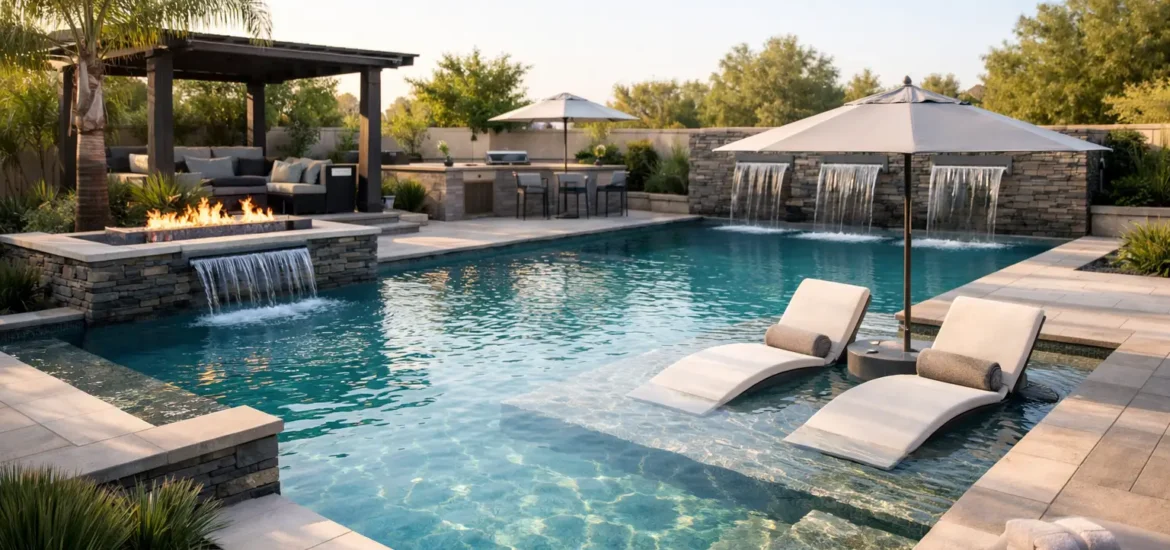
A tanning ledge is one of the most requested upgrades because it works for nearly everyone. It creates a shallow area for lounging, young children, or simply cooling off without fully swimming. Built-in benches add another layer of comfort, especially for social households that use the pool as much for conversation as recreation.

These features do depend on the pool’s existing shape and structure. Some pools can accommodate them more easily than others. That is why design planning matters. The goal is not to force a trend into the space. It is to improve how the pool functions while keeping proportions and flow intact.

Modernize with new lighting

Lighting is one of the fastest ways to make a pool renovation feel dramatic. Older incandescent fixtures often look dim and dated compared to modern LED systems. With updated lighting, the pool becomes usable and visually striking after sunset.

Color-changing LEDs can create a lively atmosphere for gatherings, while soft white lighting keeps the mood refined and understated. The best choice depends on your style. Some homeowners want a subtle glow that highlights water movement and architecture. Others want flexibility for holidays, parties, and family events.

Good lighting also improves safety. Steps, tanning ledges, and transitions become easier to see at night. For households that entertain outdoors, that practical benefit matters just as much as appearance.

Upgrade equipment for efficiency and easier ownership

Some of the best pool renovation ideas are not immediately visible. If your pump is loud, your energy bills are high, or your water chemistry feels like a constant battle, equipment upgrades can make ownership much easier.

Variable-speed pumps, updated filtration, automation systems, and modern sanitizing options can reduce maintenance demands while improving performance. Automation is especially appealing for busy homeowners. Being able to manage temperature, lighting, pump schedules, and water features from a phone adds convenience that older systems simply do not offer.

This is where renovation becomes more than cosmetic. Better equipment can support better water quality, lower operating costs, and fewer service headaches over time. The upfront investment varies, but in many cases, efficiency improvements pay off through lower energy use and a more dependable system.

Bring in water and fire features carefully

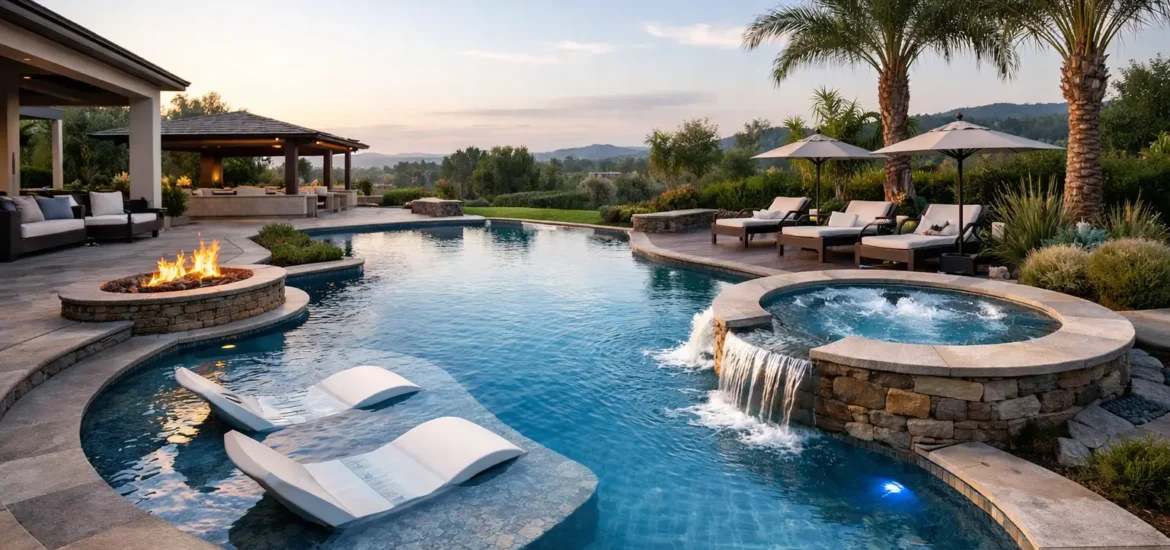
Features like sheer descents, bubblers, scuppers, and spillover spas can transform a plain pool into a stronger focal point. Fire bowls or nearby fire features add contrast and make the backyard feel more like an intentional outdoor living space.

That said, more features are not always better. In some renovations, one well-placed water feature creates a stronger result than several competing elements. It depends on the size of the yard, the architectural style of the home, and how much visual activity you want.

For Tampa Bay properties with a contemporary design direction, clean lines and restraint often create the most expensive-looking result. For family-centered backyards, features that engage kids and guests may be the better fit. The best design choices support the lifestyle first and the wow factor second.

Rethink the pool’s edge and overall shape

When a pool feels truly dated, the issue may be more than finish materials. It may be the shape, coping, or edge details. In some cases, changing the perimeter look can modernize the pool without starting from scratch.

New coping in sleek stone or modern pavers can sharpen the appearance immediately. Squared-off detailing often creates a more current feel than heavily rounded profiles. If the layout allows, certain renovations can also rework entry steps, adjust shallow-end usability, or refine awkward geometry.

This level of renovation requires a thoughtful approach because structural changes can affect budget, engineering, and timeline. Still, for homeowners planning a larger backyard transformation, it can be the difference between a simple refresh and a complete reinvention.

Connect the pool to the rest of the backyard

One of the biggest missed opportunities in renovation is treating the pool as a standalone project. The most successful upgrades connect the pool to the patio, landscaping, shade structures, and entertaining areas around it.

If you are already renovating, this is the right time to consider an outdoor kitchen, new patio layout, upgraded landscaping, or a spa addition. A pool should not feel isolated in the middle of the yard. It should anchor a complete outdoor living environment.

This is especially important for homeowners who want long-term value from the investment. A cohesive design makes the whole property feel more finished and more useful. It also creates a better day-to-day experience, whether you are hosting friends or spending a quiet weekend at home with family.

Prioritize safety without sacrificing style

Safety upgrades do not have to look purely functional. During renovation, it makes sense to evaluate depth markers, entry points, lighting, handrails, automation controls, and child-safety features.

For some households, that may include adding a sun shelf that allows easier entry. For others, it may mean replacing worn deck areas that become slick when wet or improving visibility around steps and edges. If children or older family members use the pool regularly, these details become even more important.

A well-designed renovation should make the pool safer and easier to enjoy without making it feel clinical. The strongest projects blend practical improvements into the overall design so the backyard still feels elevated and inviting.

Choose renovation ideas that fit how you live

The smartest pool renovation ideas are not always the flashiest ones. They are the ones that solve real problems and support the experience you want from your backyard. If your goal is lower maintenance, invest in equipment and materials that reduce upkeep. If you want a more luxurious setting, focus on surfaces, deck design, lighting, and integrated features. If your family needs more functionality, look closely at entry areas, seating, tanning ledges, and safety.

That is where working with one experienced design-build-renovation partner can make the process easier. A company like Wahoo Pools can help homeowners look beyond isolated upgrades and plan a renovation that feels cohesive from the pool finish to the patio layout to the equipment behind the scenes.

A renovation should do more than update what looks old. It should make the space feel easier to own, better to use, and more rewarding every time you step outside.
11 Small Backyard Plunge Pool Ideas

11 Small Backyard Plunge Pool Ideas

A tight backyard does not rule out a standout pool. In fact, some of the best small backyard plunge pool ideas come from working with limited space, not fighting it. For homeowners across Tampa Bay, a plunge pool can deliver the cool-down, style, and everyday escape of a larger pool without taking over the entire yard.

That matters in Florida, where outdoor living is not a seasonal extra. It is part of how families relax, entertain, and make the most of home. The right plunge pool design can turn an underused side yard, compact courtyard, or narrow rear lot into a polished retreat that feels intentional from every angle.

Why plunge pools work so well in small yards

A plunge pool is built for soaking, cooling off, and enjoying the space around it as much as the water itself. That makes it a strong fit for homes where every square foot needs to work harder. Instead of stretching for a full-size pool that leaves no room for seating, landscaping, or circulation, a plunge pool creates balance.

There is also a practical side to the appeal. Smaller water volume often means lower ongoing maintenance demands, less chemical use, and faster heating when homeowners choose to add that feature. Installation timelines can also be more manageable depending on design complexity, access, and local requirements. The trade-off is obvious – if your priority is lap swimming or large pool parties, a plunge pool may feel limiting. But if your goal is a refined backyard experience with strong daily usability, it is often the smarter choice.

Small backyard plunge pool ideas that make the most of every foot

1. Go geometric for a clean, modern look

Simple rectangular or square plunge pools tend to perform best in compact yards because they use space efficiently. Crisp lines also pair well with contemporary homes, streamlined decking, and minimalist landscaping.

This approach works especially well when the pool is aligned with the architecture of the house. If your patio, rear elevation, or fence line already creates strong visual lines, a geometric plunge pool can make the whole backyard feel more organized and more spacious.

2. Add a raised spa edge for a luxury feel

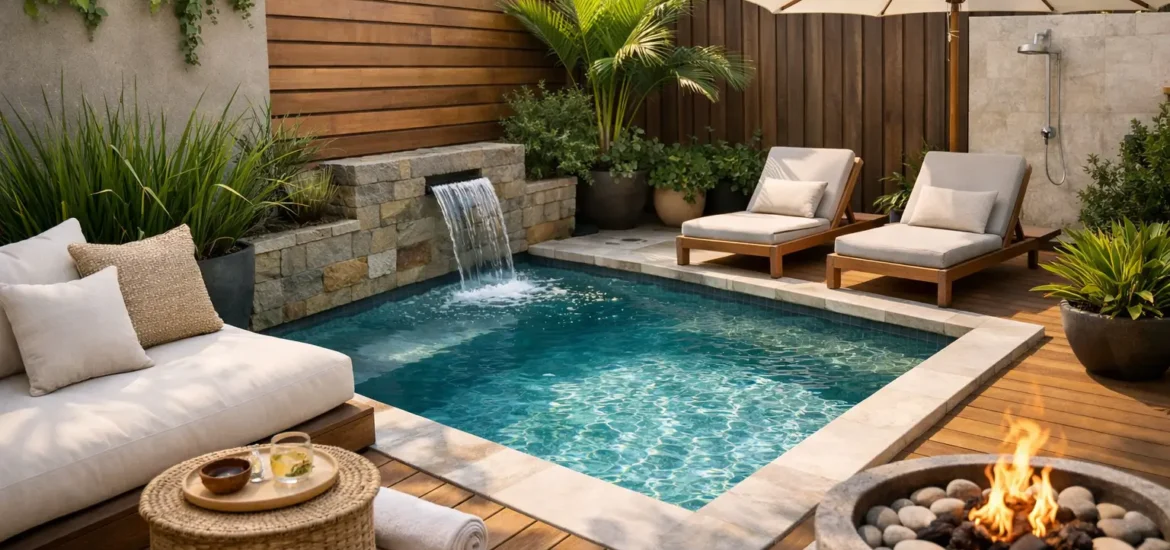
If you want a small pool to feel more custom, combining a plunge pool with a spa-style feature is a strong move. A raised wall with spillover adds sound, movement, and a more upscale finish without requiring a much larger footprint.

For families who want year-round use, this can also improve versatility. In Florida, a heated plunge pool or integrated spa feature gives the yard more value during cooler months. The key is thoughtful proportion. In a small space, oversized features can quickly make the design feel crowded.

3. Use perimeter seating instead of extra furniture

Built-in bench seating inside the pool is one of the most useful design choices for compact layouts. It creates a place to lounge without eating up deck space with more chairs, and it makes the pool feel social even when the footprint is modest.

This is one of those details that sounds minor on paper but changes how the space gets used. If you picture yourself talking with friends, supervising kids, or relaxing after work, seating ledges can matter more than a few extra feet of open water.

4. Let the deck do part of the design work

A small plunge pool feels bigger when the hardscape around it is carefully planned. Large-format pavers, consistent material transitions, and a restrained color palette can visually widen the yard. On the other hand, too many cuts, colors, or pattern changes can make the area feel broken up.

Decking should not be treated as leftover space. In many small backyards, it is what determines whether the pool feels like a luxury feature or simply a water box behind the house. Even a narrow sun shelf surround or compact lounge area can make the space feel complete.

5. Tuck the pool into a side yard or courtyard

Not every plunge pool has to sit in the center of the backyard. Some of the best small backyard plunge pool ideas come from placing the pool where a larger design never could. Side yards, interior courtyards, and overlooked corners can become highly functional relaxation zones.

This approach is especially effective for homes with challenging lot shapes. It does require careful planning around access, drainage, privacy, and equipment placement, but it can open up options that homeowners initially assume are off the table.

Design details that elevate a compact plunge pool

6. Build in privacy from the start

Smaller yards often mean closer neighboring views, so privacy should be part of the design, not an afterthought. Privacy walls, decorative screens, hedging, and layered plantings can help the plunge pool feel tucked away and more resort-like.

In Florida, this also creates an opportunity to soften the hardscape with tropical landscaping. Palms, clumping grasses, and clean architectural plantings can frame the water beautifully. The goal is not to overplant a small space. It is to create a sense of enclosure without making the yard feel tight.

7. Use water features sparingly

A sheer descent, scupper, or subtle spillway can add movement and sound, which is a big advantage in neighborhoods where you want a little acoustic privacy. But in a small pool, less is usually more.

One focused water feature often feels more refined than several competing elements. Too much splash, sound, or visual activity can overwhelm a compact design. The strongest results tend to come from one statement detail executed well.

8. Consider darker interior finishes

Interior finish color changes the mood of a plunge pool quickly. Lighter finishes feel bright and classic, while darker finishes can create a richer, more reflective surface that reads as sophisticated and modern.

This choice depends on the look you want and how the pool sits in the sun. Darker finishes may absorb more heat, which can be a benefit for some homeowners and less appealing for others during peak summer. It is one of those decisions where aesthetics and comfort should be weighed together.

9. Add lighting that makes the yard usable at night

A plunge pool earns its keep when it works after sunset. Underwater LED lighting, subtle step lights, and low-voltage landscape lighting can turn a compact backyard into an evening retreat without overcomplicating the design.

Good lighting is about comfort as much as appearance. It improves safety, extends usable hours, and highlights the details you invested in. In small spaces, thoughtful lighting can also make the entire yard feel deeper and more polished.

What to think about before you choose a plunge pool layout

10. Match the pool to how your family will actually use it

This is where many homeowners either make a smart investment or end up with a beautiful feature that does not fit daily life. If your family wants a place to cool off, soak, entertain a few guests, and enjoy a more upscale backyard, a plunge pool checks a lot of boxes. If you need room for active swimming, games, or a crowd of kids, you may need to rethink the size or the overall outdoor plan.

It also helps to think beyond the pool shell. Will you want an outdoor kitchen nearby? A tanning space? Fire features? More shade? A compact pool can free up room for the other amenities that make the backyard feel complete.

11. Plan for maintenance and equipment access

A smaller pool can be easier to maintain, but it still needs smart equipment planning. Pumps, filters, heaters, automation, and sanitation systems should be selected with long-term ownership in mind, not just first-cost pricing.

This is where working with one experienced team matters. Design decisions affect construction, and construction decisions affect serviceability down the line. A beautiful plunge pool should also be easy to care for, efficient to run, and built with durable materials that hold up in the Florida climate.

Bringing small backyard plunge pool ideas to life in Florida

In the Tampa Bay area, compact yards often come with specific considerations like drainage, setback requirements, sun exposure, and storm-ready materials. That is why the best plunge pool projects are not just attractive on a screen. They are tailored to the lot, the home, and the way the family wants to live outdoors.

A well-designed plunge pool can absolutely feel high-end, even in a limited footprint. Sometimes it feels more high-end because every inch is intentional. Clean lines, integrated seating, smart hardscape design, and the right finishing details can make a modest backyard feel like a private resort.

At Wahoo Pools, that is the value of designing the entire experience rather than dropping a pool into the yard and hoping the rest falls into place. When the pool, patio, features, and long-term care strategy are considered together, the result feels more effortless for the homeowner and more complete in the final build.

If your backyard is small, think of that as a design filter, not a limitation. The best spaces are rarely the biggest. They are the ones that feel personal, polished, and ready to enjoy the moment you step outside.

Plunge Pool Installation: What to Expect

Plunge Pool Installation: What to Expect

A full backyard overhaul is not the only path to a private resort feel. For many Tampa Bay homeowners, plunge pool installation is the smarter move – faster to build, easier to fit into tighter spaces, and still impressive enough to change how the entire yard looks and feels.

That appeal is not just about size. A well-designed plunge pool can create a high-end outdoor living area without the footprint, cost, or upkeep of a larger traditional pool. If you want a place to cool off, relax, entertain, and raise the value of your home, a plunge pool often checks every box.

Why plunge pool installation is gaining attention

In Florida, outdoor living is part of daily life for much of the year. Homeowners want spaces that look polished, work hard, and do not take over the entire yard. That is exactly where plunge pools stand out.

They fit properties where a full-size pool may feel excessive or simply will not fit. They also make sense for families who want a water feature that feels luxurious but stays practical. You still get the visual impact of a custom pool, especially when it is paired with a spa spillover, paver deck, outdoor kitchen, fire feature, or modern landscaping.

There is also a timeline advantage. In many cases, plunge pool installation can move more quickly than a large custom pool build, although the exact schedule depends on permitting, site access, weather, and design complexity. If your goal is to transform your yard without committing to a months-long major construction project, that matters.

What counts as a plunge pool?

A plunge pool is a compact pool designed more for cooling off, lounging, and light recreation than lap swimming. Sizes vary, but the defining feature is efficiency. It gives you a premium water feature in a smaller footprint.

That does not mean it has to feel basic. Many homeowners choose custom finishes, tanning ledges, integrated benches, waterline tile, lighting, heating, and automation. In other words, smaller does not mean stripped down. In the right design, it can feel even more intentional.

What to expect during plunge pool installation

The best projects start well before excavation. The first step is understanding how you want to use the space. Some homeowners want a cooling retreat after work. Others are building around family time, weekend entertaining, or a complete outdoor living plan.

Design and site planning

Your contractor should evaluate your lot, drainage, setback requirements, utility locations, and how the pool will relate to the house, patio, and existing features. In Tampa Bay, site planning matters because every yard has its own conditions. Soil, grading, access points, and neighborhood regulations can all influence the final design.

This is also when layout decisions happen. A rectangular plunge pool may suit a clean contemporary backyard. A compact geometric design may make more sense if you are preserving lawn space or working around a lanai. The key is not choosing a small pool at random. It is designing one that feels integrated with the whole property.

Permits and engineering

This is the stage many homeowners underestimate. Local permitting, engineering requirements, and code compliance all affect the schedule. Safety barriers, setback rules, and structural plans are not side details – they are part of doing the job correctly.

An experienced builder should handle this process for you and keep you informed about realistic timing. That guidance is valuable because permit timelines can shift based on municipality and project specifics.

Excavation and shell construction

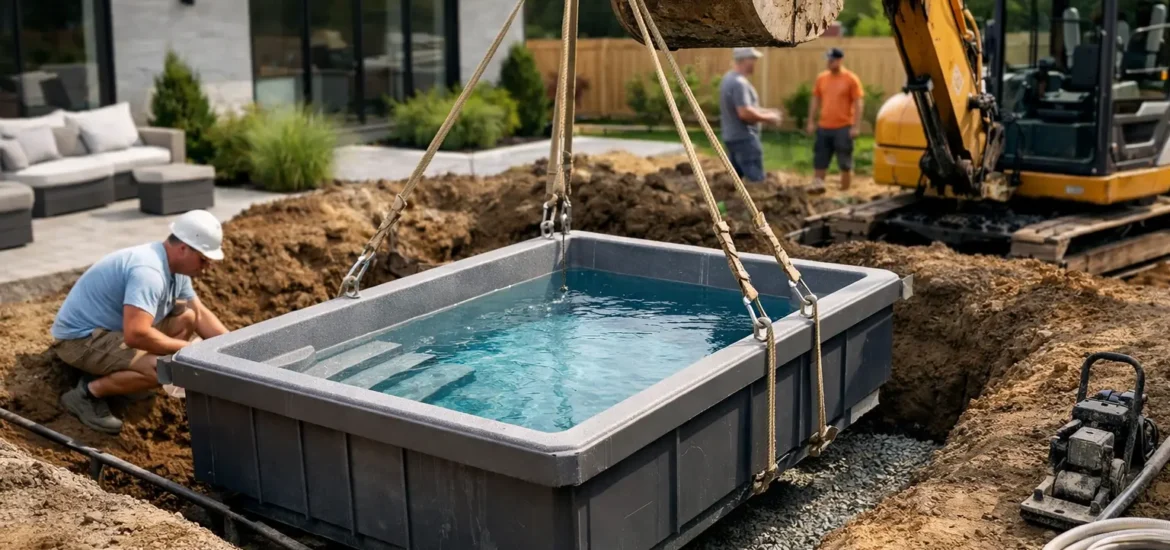
Once approvals are in place, construction begins with layout and excavation. Even a small pool requires precision. Depth, elevation, plumbing runs, and structural support all need to be right from the start.

Depending on the design, the pool shell may be concrete or another approved construction method. In luxury residential settings, custom concrete is common because it allows more flexibility with shape, finish, and built-in features. This stage creates the structure that everything else depends on, so quality here matters more than speed.

Plumbing, electrical, and equipment

A plunge pool may be compact, but it still needs the right circulation, filtration, and electrical setup. If you are adding a heater, automation, LED lighting, or spa-style jets, those systems must be coordinated carefully.

This is one reason homeowners often prefer a full-service company rather than piecing together separate trades. The equipment selection should match how you plan to use the pool, not just meet the minimum requirement. A beautiful finish means less if the system is hard to manage or expensive to maintain.

Finishes and outdoor living details

Once the structure and systems are in place, the project begins to look finished. Interior finishes, coping, tile, decking, and surrounding design elements shape the final result.

This is where a plunge pool can become a true backyard destination. The pool itself may be compact, but the experience can feel expansive when the surrounding patio, seating areas, shade, lighting, and landscape are designed together. That is often the difference between a small pool and a complete outdoor living environment.

How long does plunge pool installation take?

Homeowners understandably want a straight answer, but the honest one is that it depends. A simpler project with favorable site conditions and smooth permitting will move faster than a custom design with added features and more complex access.

In general, plunge pools can often be installed more quickly than larger custom pools. Still, weather delays, municipal review times, material availability, and upgrade selections can all affect the schedule. The right contractor will give you a realistic timeline instead of an overly optimistic one.

What affects the cost?

Plunge pools are usually more affordable than larger pools, but cost is still driven by details. Size matters, of course, but so do finish selections, equipment choices, decking, site conditions, and how much of the backyard is being upgraded at the same time.

A basic plunge pool will price very differently from one with premium tile, automation, heating, custom lighting, water features, and an upgraded patio package. Access can also influence labor and equipment costs. If your yard is difficult to reach or requires special handling, that changes the job.

The bigger point is this: value is not just about spending less. It is about building the right pool for your lifestyle, property, and long-term maintenance comfort.

Design choices that make a small pool feel luxurious

This is where homeowners can get the most creative. Because the water footprint is smaller, design details tend to stand out more. Clean coping lines, dramatic tile, built-in seating, and elegant lighting can elevate the entire look.

Heating is another feature worth considering in Florida. Many people assume it is unnecessary, but a heated plunge pool extends comfort during cooler months and evenings. If relaxation is a major goal, bench seating and hydrotherapy-style jets can also make a compact pool work more like a personal retreat.

For modern homes, simple geometric forms often look best. For more transitional properties, softer finishes and integrated landscape design may create a more natural fit. Good design is not about copying a photo. It is about making the pool look like it belongs with your home.

Why installation quality matters after the build

A plunge pool may be smaller, but it is still a long-term investment. Poor installation can create problems that show up later in plumbing performance, finish durability, drainage, and overall maintenance demands.

That is why many homeowners want one partner to manage design, construction, equipment setup, and long-term service. It creates accountability. It also means the people building the pool understand how it will need to perform after startup.

For busy households, that support matters just as much as the original build. A pool should feel enjoyable, not like another project waiting on your to-do list.

Is a plunge pool right for your home?

If you have a smaller yard, want a quicker path to a finished backyard, or prefer a more efficient pool with strong visual impact, the answer may be yes. If your priority is full-length swimming or large-group recreation, a larger pool may still be the better fit.

That trade-off is worth discussing early. The right choice depends on how you live, how much outdoor space you want to preserve, and what kind of ownership experience you want after construction ends. For many Tampa Bay families, a plunge pool lands in the sweet spot between luxury and practicality.

At Wahoo Pools, that is often where the conversation starts – not with the biggest possible build, but with the smartest one for the property and the family using it.

If you are considering plunge pool installation, think beyond the shell itself. The best result is a backyard that feels finished, comfortable, and easy to enjoy long after construction wraps up.

Swimming Pool Construction Installation Maintenance

Swimming Pool Construction Installation Maintenance

A beautiful pool is not just a construction project. It is a long-term part of how your family lives at home. That is why swimming pool construction installation and maintenance should never be treated as separate conversations. The way a pool is designed and built affects how it performs, how much care it needs, and how enjoyable it feels years after the water goes in.

For homeowners in the Tampa Bay area, that matters more than most people realize. Florida pools work hard. They face heavy sun, frequent rain, long swim seasons, shifting temperatures, and regular use by families who expect their backyard to feel like a private resort. A pool that looks impressive on day one but creates constant upkeep headaches later is not a smart investment. The better approach is to plan the full life of the pool from the start.

Why swimming pool construction installation and maintenance belong together

Some homeowners begin with shape, tile, and finish choices, then think about service later. That is understandable, but it often leads to avoidable compromises. Equipment placement, plumbing layout, circulation design, finish selection, automation, and deck drainage all influence what ownership feels like after installation.

A well-built pool should do more than fit the space. It should circulate water efficiently, support easy cleaning, protect surfaces, and give you dependable performance during Tampa Bay’s long hot months. If maintenance is considered early, the result is usually lower operating stress, fewer service issues, and a backyard that stays ready for guests, weekends, and family time.

This is especially true for custom projects. A luxury pool with a spa, fire feature, sun shelf, outdoor kitchen, or plunge area can be stunning, but each added feature changes how the system should be planned. More water features may require stronger hydraulic design. More integrated outdoor living elements call for better coordination across trades. The payoff for getting that right is simple – your pool looks elevated and works the way it should.

Construction decisions that shape long-term ownership

The early design phase is where many of the most important maintenance decisions are quietly made. Pool owners often focus on the visible finishes, but the hidden systems behind the walls matter just as much.

Circulation and plumbing matter more than most people think

Good circulation is one of the foundations of clean, clear water. If return lines, skimmers, and drains are poorly planned, certain areas may not move water effectively. That can lead to dead spots, debris buildup, uneven chemical distribution, and extra service demands.

A thoughtful installation takes the pool’s exact shape and features into account. A geometric pool, a freeform layout, and a compact plunge pool each behave differently. The right plumbing design helps water move consistently, which supports sanitation and protects surface quality over time.

Equipment choices affect cost and convenience

Not all pool equipment creates the same ownership experience. Pumps, filters, heaters, chlorination systems, and automation controls should be chosen based on how the pool will actually be used. A family that swims often, entertains regularly, and wants spa heat on demand has different needs than a homeowner building a smaller, lower-use pool.

There is always a trade-off. Higher-performing equipment and automation can cost more upfront, but they often improve efficiency, comfort, and ease of care. On the other hand, overspending on features you will rarely use does not always make sense. The right setup is the one that matches your lifestyle, not the one with the longest feature list.

Finish materials influence both appearance and upkeep

Interior finish, tile, coping, and deck materials all affect maintenance. Some surfaces are easier to clean. Some hold up better against weather and heavy sun. Some provide a more upscale visual result but require more attentive care to preserve that look.

For Florida homeowners, slip resistance, heat performance, and stain resistance deserve as much attention as color and style. A deck that looks great in photos but becomes uncomfortably hot in summer can change how often the space gets used. A finish that does not fit the home’s traffic level may age faster than expected. Good design balances beauty with real-life durability.

What a strong pool installation process should include

Installation is where plans become performance. A polished design means very little if execution is inconsistent. Homeowners should expect a process that feels organized, transparent, and guided from start to finish.

That begins with site evaluation and planning. Grading, drainage, access, soil conditions, setbacks, and local permitting all influence the timeline and the final build. In many Tampa Bay neighborhoods, those details can affect everything from equipment location to deck layout to how quickly a project moves forward.

From there, excavation, structural work, plumbing, electrical, finish application, and startup all need careful coordination. This is one reason many homeowners prefer a single experienced team instead of trying to manage multiple contractors themselves. When design, build, and service are aligned, there is usually better accountability and fewer gaps between what was promised and what gets delivered.

For homeowners who want speed without sacrificing quality, quicker-build options such as plunge pools or accelerated build programs can be appealing. They are not right for every property or every vision, but they can be a smart fit for families who want a refined backyard upgrade on a faster timeline.

Swimming pool maintenance after installation

Once the pool is filled and running, maintenance becomes the difference between stressful ownership and confident enjoyment. New pool owners sometimes assume pool care is mostly skimming leaves and adding chemicals. The reality is broader. Water chemistry, filter condition, circulation, surface protection, equipment inspections, and seasonal adjustments all matter.

Water chemistry protects more than water clarity

Balanced water is about more than appearance. It helps protect the finish, tile line, equipment, and swimmer comfort. When chemistry drifts, problems can build slowly. Etching, scaling, cloudy water, algae growth, and shortened equipment life often begin with small imbalances that go uncorrected.

Florida weather adds another layer. Heavy rain can dilute chemistry. Intense sun can affect sanitizer demand. Frequent use can shift the water faster than some homeowners expect. Consistent testing and adjustment are what keep a pool stable.

Equipment service keeps small issues from becoming expensive ones

Pumps, filters, heaters, salt systems, lights, and automation controls need periodic attention. A system can still run while underperforming, which is why routine service matters. Reduced flow, dirty filters, valve issues, or early signs of wear may not seem urgent at first, but they can create bigger repair costs if ignored.

This is where professional maintenance has real value for busy households. It saves time, but just as important, it gives you trained eyes on the system before small issues interrupt your summer plans.

Surface care and cleaning preserve the luxury feel

A premium backyard should keep looking like one. Brushing, vacuuming, skimming, basket cleaning, tile care, and stain prevention all help preserve the visual quality of the pool. If a pool is attached to an outdoor living space with decorative decking, water features, and entertaining areas, regular care becomes even more important because the pool sets the tone for the whole backyard.

Renovation, upgrades, and the long view

Pool ownership does not stay static. Families grow, usage changes, technology improves, and older pools begin to show their age. Sometimes the right move is not new construction but renovation or targeted upgrades.

A resurfacing project, new tile, modern lighting, better automation, energy-efficient equipment, or a redesigned patio can completely change how a backyard feels. For older pools, renovation is often the bridge between an outdated setup and a more modern resort-style environment.

The key is to think beyond appearance. A renovation should improve usability and reduce friction too. If your current pool is hard to maintain, expensive to operate, or poorly suited to how your family uses the space now, those are design problems worth solving, not just cosmetic issues worth covering up.

Choosing a partner for the full pool journey

When homeowners think about swimming pool construction installation and maintenance as one connected experience, they tend to make better decisions. They ask sharper questions. They plan for how the pool will live on the property, not just how it will look in a rendering.

That is why many families prefer a full-service partner that can design the space, build it correctly, support equipment needs, and maintain it long after installation. Wahoo Pools is built around that kind of relationship, guiding homeowners from dream backyard concepts to dependable long-term care with one accountable team.

The best pool is not the one that only photographs well after startup. It is the one your family still loves using on an ordinary Saturday two years from now, because it was designed with the future in mind.

Custom Swimming Pool Designs That Fit Life

Custom Swimming Pool Designs That Fit Life

A great pool starts long before excavation. The best custom swimming pool designs are not built around a trend, a photo, or a single feature. They are built around how your family lives, how your yard functions, and how much time you want to spend enjoying the space versus managing it.

For homeowners across Tampa Bay, that distinction matters. Florida weather gives you more months to use a pool than many parts of the country, which means the design has to work hard year-round. It should feel beautiful on day one, but it also needs to make sense in August heat, during holiday gatherings, and on ordinary weeknights when the kids want to swim for half an hour before dinner.

What custom swimming pool designs really get right

A custom pool is not simply a pool with upgraded finishes. Real customization means the shape, depth, materials, features, and surrounding outdoor space are planned together. That is where the project shifts from a backyard addition to a true lifestyle upgrade.

For one family, that may mean a modern geometric pool with a raised spa, clean lines, and integrated lighting for evening entertaining. For another, it may mean a compact plunge pool with low-maintenance equipment and enough deck space for outdoor dining. Both are custom. Both can be luxury. The difference is that each one answers a different set of needs.

The biggest mistake homeowners make is assuming larger automatically means better. In many Tampa-area backyards, a better design is one that preserves lawn space, improves traffic flow, and gives every square foot a purpose. A pool should not dominate the yard unless that is exactly what you want. Often, the smartest design creates balance between water, shade, seating, cooking, and open space.

How to plan custom swimming pool designs around real life

The most successful projects usually begin with a few practical questions. Who will use the pool most often? Is this space primarily for entertaining, relaxing, fitness, or family time? Do you want a quiet retreat, a social centerpiece, or a little of both?

These questions shape almost every design decision. Families with young children may prioritize shallow lounge areas, clear sightlines from the house, and safety features that feel built in rather than added later. Homeowners who entertain often may care more about spillover spas, sun shelves, fire features, and the relationship between the pool and an outdoor kitchen.

There is also the question of maintenance. Some features look impressive but require more cleaning, more balancing, or more long-term upkeep. That does not make them a bad choice. It just means they should be chosen intentionally. A vanishing edge, intricate water features, or extensive glass tile can be stunning, but the right fit depends on your priorities, budget, and willingness to maintain the finish.

That is why design continuity matters. When one team handles design, construction, equipment planning, and ongoing service, the result is usually more cohesive. You are less likely to end up with a beautiful concept that becomes frustrating to own.

Design choices that make the biggest visual impact

Shape is often the first place homeowners focus, and for good reason. A geometric pool creates a crisp, architectural look that pairs well with contemporary homes and structured outdoor living spaces. Freeform pools feel softer and more relaxed, especially in yards designed for a resort-style atmosphere.

But visual impact comes from more than shape alone. Interior finish color affects how the water reads in the sun. Lighter finishes can create a bright, tropical feel, while darker finishes tend to produce a richer, more reflective look. Coping and paver selections also matter more than many homeowners expect. These materials frame the water and set the tone for the whole backyard.

Lighting is another design choice that deserves more attention. Good pool lighting changes how the space feels at night, improves safety, and extends the hours your family can use the backyard. The best lighting plans do not just illuminate the water. They support the entire environment, from steps and tanning ledges to nearby seating and landscape features.

Then there are the extras homeowners usually notice first in finished project photos – raised walls, scuppers, sunshelves, spa spillovers, fire bowls, and integrated benches. These features can elevate the space, but restraint often creates a more timeless result. A pool does not need every available upgrade to feel custom. It needs the right combination of features for the home and the people living in it.

The Tampa Bay factor

Designing in Florida comes with advantages, but it also comes with specific demands. Heat, humidity, strong sun, frequent rain, and storm season all influence material selection and layout. A design that looks good in a cooler climate may not perform the same way here.

Shade is a perfect example. In a rendering, a wide open deck can look clean and expansive. In practice, Tampa Bay homeowners often want a mix of sun and relief from the heat. Covered patio areas, pergolas, and thoughtful furniture zones can make the space far more usable during peak summer months.

Drainage and deck planning also deserve careful attention. Heavy rains can quickly expose poor grading decisions. A well-designed outdoor living space should handle Florida weather without creating puddling, runoff problems, or awkward transitions between the pool and patio.

This is one reason many homeowners prefer working with a full-service partner rather than piecing together designers, builders, and service providers on their own. A luxury backyard should feel easy to own, not complicated from day one. For families who want that level of accountability, Wahoo Pools brings design, build, renovation, and long-term care into one guided process.

Luxury means different things to different homeowners

In high-end pool design, luxury is not just about cost. It is about intention. Some homeowners want a dramatic visual statement the moment guests step outside. Others want privacy, calm, and everyday comfort.

A spa may be non-negotiable for one household and unnecessary for another. A plunge pool can be the perfect answer for a compact property or a homeowner who wants quick installation and lower maintenance. A larger pool with a connected outdoor kitchen and entertainment area may make more sense for families who host often.

This is where honest trade-offs matter. More waterline tile can create a polished finish, but it adds cost. More deck space improves flexibility, but it affects the overall footprint and budget. A deeper pool may feel more traditional, but many homeowners today get more use out of shallower designs with conversation areas, ledges, and open play space.

There is no single best layout. There is only the layout that best matches the way you want to live.

Renovation counts as custom too

Not every dream backyard starts from scratch. Many Tampa Bay homeowners already have a pool, but it no longer fits their style, safety needs, or maintenance expectations. In those cases, renovation can deliver the same personalized result as a new build.

Resurfacing, tile updates, coping replacement, deck redesign, equipment modernization, and the addition of spas or water features can completely change how an older pool looks and functions. Sometimes the smartest investment is not starting over. It is improving what is already there with a better plan.

That approach can be especially appealing for busy families who want a stronger visual finish and easier ownership without the scope of a total backyard rebuild. A dated pool can become a contemporary focal point when the design is handled with the same care as a new custom project.

A pool should still make sense five years from now

The strongest custom swimming pool designs hold up beyond the excitement of installation. They still feel practical after the first full summer, still look current after design trends shift, and still support your household as routines change.

That is why the planning stage matters so much. A family with young kids may want features that grow well over time. Empty nesters may prioritize comfort, low maintenance, and outdoor entertaining. Homeowners thinking about resale may care about broad appeal without sacrificing personal enjoyment.

Good design balances what you want now with what will continue to work later. It leaves room for real life. It supports your budget, your property, and your time. Most of all, it creates a backyard you will actually use instead of one you simply admire through the window.

When you approach your project that way, the right design tends to become clear. Not because it follows a trend, but because it fits your home so naturally it feels like it should have been there all along.